The Sigma Software team has been providing IT outsourcing services to startups and Fortune 100 firms for over 20 years. The company has an extensive presence in the world’s major IT Hubs and orchestrates distributed teams in different locations. In this article, we will portray specifics of outsourcing software development to Eastern Europe, describe the peculiarities of today’s talent market, navigate through the region's top destinations, and look at locations that are leading the way. We will underpin all of this with a list of advantages that outline why involving Eastern European developers is beneficial for your business.
Software Development Outsourcing to Eastern Europe: Which Country to Choose in 2026?
Why Choose Eastern Europe for Software Development Outsourcing?
Top Eastern European Countries for Software Outsourcing in 2026
Which Eastern European Country Is Best For Software Development?
Why choose Sigma Software as an IT outsourcing development company in Eastern Europe?
Software Development Outsourcing to Eastern Europe: Which Country to Choose in 2026?
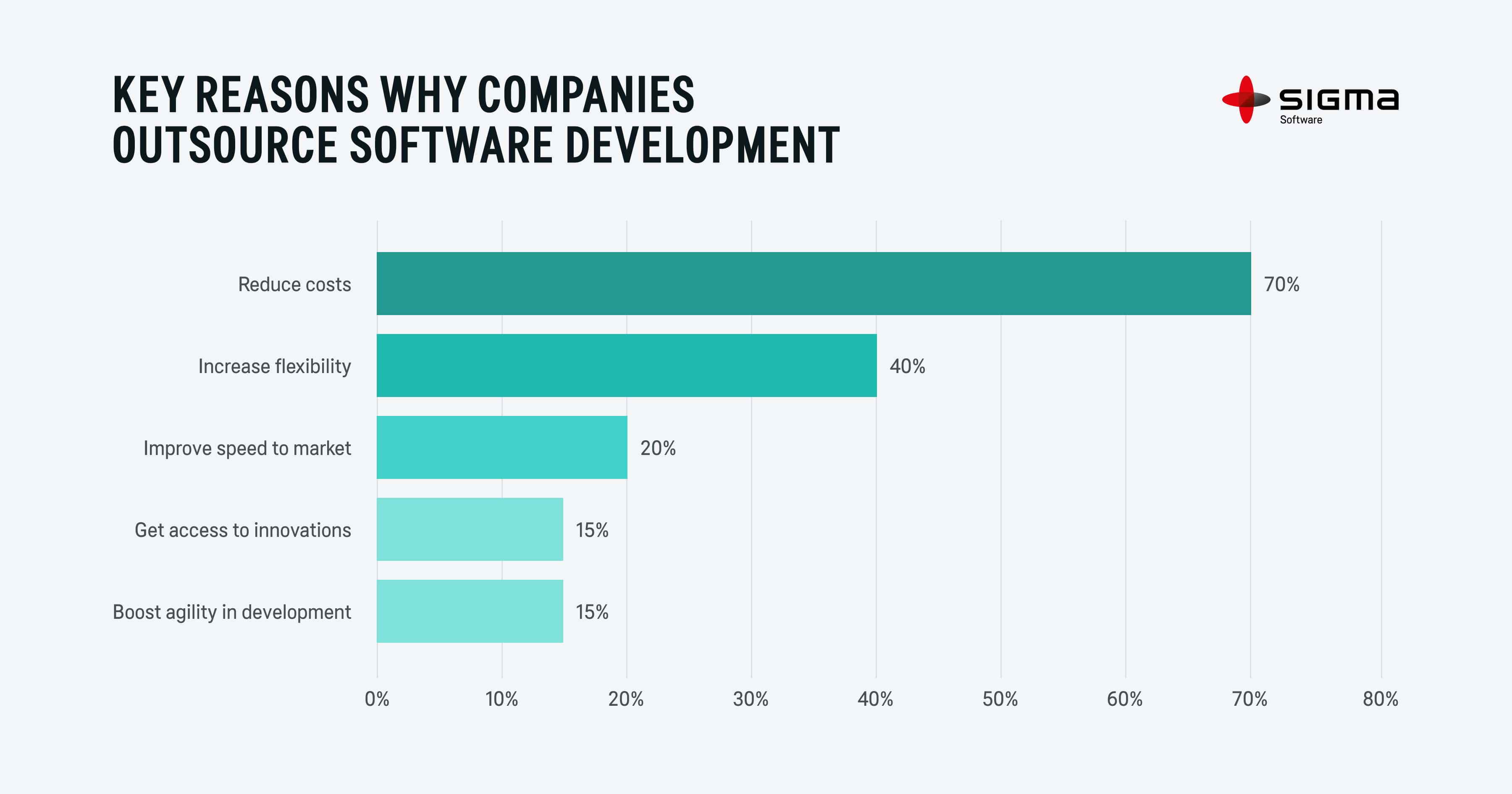
IT outsourcing has been a go-to solution for companies around the world, from startups to Fortune 100 leaders. This approach allows them to save substantial recruiting efforts and reduce costs on software development without compromising quality. According to Statista, the global IT outsourcing market will grow up to $578.30 billion by 2027.
Based on: Deloitte
The growth is fueled by the growing demand for digital transformation and innovation in all business segments. However, the latest trend for cost optimization pushes companies to look for more cost efficient yet reliable resource pools. Thus, many organizations today are reviewing their outsourcing strategies and seeking to source specialists from new locations.
Then comes the key question: what destination to choose? Historically, Eastern Europe has been one of the major IT outsourcing markets for leading companies from North America, Canada, Australia, the United Kingdom, and other Western European countries. Hence, its revenue keeps consistently growing, and Statista forecasts an additional 6.82% increase between 2025 and 2030, reaching a market volume of US$7.43 billion by 2030.
Why Choose Eastern Europe for Software Development Outsourcing?
The ongoing Russian war against Ukraine poses challenges to Eastern Europe as an outsourcing destination. Despite the risks, local businesses prove their preparedness and adaptability to wartime, keeping operations running steadily and indicating sustainable growth. Ukraine, in particular, has increased the talent pool by over 7% in 2023, reaching a total of 307,600 specialists, while its IT industry remains one of the top contributors to the country’s economy.
The advantages listed below are among the key reasons why the Eastern European landscape has been and remains the preferred outsourcing destination for many companies around the globe.
A rich pool of experienced tech professionals
Eastern Europe has always been a powerhouse of talented software engineers. The cumulative talent pool in the region reached 1.5 million developers in 2025, and you can easily find talent with deep tech and domain expertise.
Eastern European specialists are at the forefront of software development, and their proficiency is recognized in various world ratings. For example, SkillValue places them at the top of the World’s Best Developers list. Recent research by Coursera states that the regional workforce is highly qualified and has cutting-edge competencies. Software developers in Eastern Europe have been invariably featured in the HackerRanking list of the World’s best engineers for several years in a row.
In addition, there are many technical universities in Eastern Europe that foster new talent. Most of them are featured in the Top 100 Best Universities List and are recognized globally due to their educational proficiency.
Similarities in Culture and Mentality
IT outsourcing always involves interaction among a company, a provider, and a team, which can be hindered by a cultural mismatch. Cultural differences have a big impact on conflict management, communication styles, teamwork, etc. So, a clash of completely different mentalities can lead to additional overhead and risks.
Outsourcing to Eastern European companies reduces the likelihood of having cultural differences and provides simpler communication and smoother business collaboration. Eastern European developers are seasoned in collaboration with international teams, so the communication gaps are rarely an issue. Most software development companies from Eastern Europe have substantial experience working with US and Western EU businesses and are familiar with the business culture, communication style, and ways of work in these countries. Therefore, in most cases, outsourcing providers from Eastern Europe are reliable and long-term partners who speak your business language.
Proactive thinking
American and Western European businesses have long appreciated the proactive thinking that the teams in the region demonstrate towards building and delivering projects. Outsourced teams often come up with new initiatives and are willing to take more ownership of the clients’ projects. They focus on the overall success of the business rather than just completing tasks. Specialists from Eastern Europe take full responsibility for their deliverables and regularly contribute with recommendations on the optimization of delivery processes.
Robust data privacy and security
One of the advantages the Eastern European landscape offers is a similarity in legal regulations. The region complies with copyright laws and policies like the General Data Protection Regulation (GDPR). Thus, Eastern European solution providers take all measures required to safeguard data privacy and security.
Operating in a tightly regulated EU environment, Eastern European outsourcing providers are typically well-versed in U.S. standards too. As a result, U.S. businesses can expect security and data privacy practices that meet their laws and requirements when opting for IT outsourcing in Eastern Europe.
Local outsourcing providers learned lessons from running business during the pandemic and geopolitical tension, so they used that experience to safeguard uninterrupted and efficient remote work, despite any external influence. They ensure your information is safe and eliminate risks of possible threats by introducing secure authentication, VPN, data encryption, privacy equipment, etc.
Reasonable development costs
Eastern Europe is a world-renowned offshore destination with the best correlation of value for money. The hourly development rates in Eastern Europe are not the lowest among outsourcing regions, however, if you consider the Total Cost of Ownership (TCO) for your development, Eastern Europe provides the most optimal ratio. The TCO includes not only the developers’ efforts but also the management, retention & motivation overhead that you would normally have on your end. Eastern European outsourcing companies are usually willing to take more responsibility over the development process, thus reducing your in-house overhead.
The overall hourly rates in Eastern European countries may vary between $35 and $100, based on the skills and seniority level of technical experts as well as the outsourcing model used. (Check our article about the pros and cons of outsourcing development for more information about the differences between outsourcing models).
The outsourcing rates by country differ as well, but they are still lower compared to the prices offered by local suppliers in the US, Western, or Scandinavian countries.
Top Eastern European Countries for Software Outsourcing in 2026
During 2024–2025, Eastern Europe’s IT sector remained stable, navigating geopolitical and economic headwinds well. Yet, results varied by country: Poland, Romania, and Bulgaria continued to grow, while Ukraine is focused on keeping resiliency and operation at its historical levels.
Overall, the sector continued to expand, fueled by a large, skilled workforce and ongoing digital transformation efforts across countries. All this helps the region to keep its position as a leading outsourcing destination, attracting foreign investment and maintaining high demand for software engineering services.
Related article: Nearshore software development
According to Clutch, there are 3,535 companies in Eastern Europe that offer software outsourcing services. As for June 2025, the biggest IT hubs in the regions are:
- Poland (1348 companies)
- Ukraine (990 companies)
- Romania (458 companies)
However, we usually suggest having a broader perspective and considering Bulgaria, the Czech Republic, and Hungary as well. Below is a detailed overview of the IT sectors in these countries.
Ukraine
Based on: DOU, TechUkraine
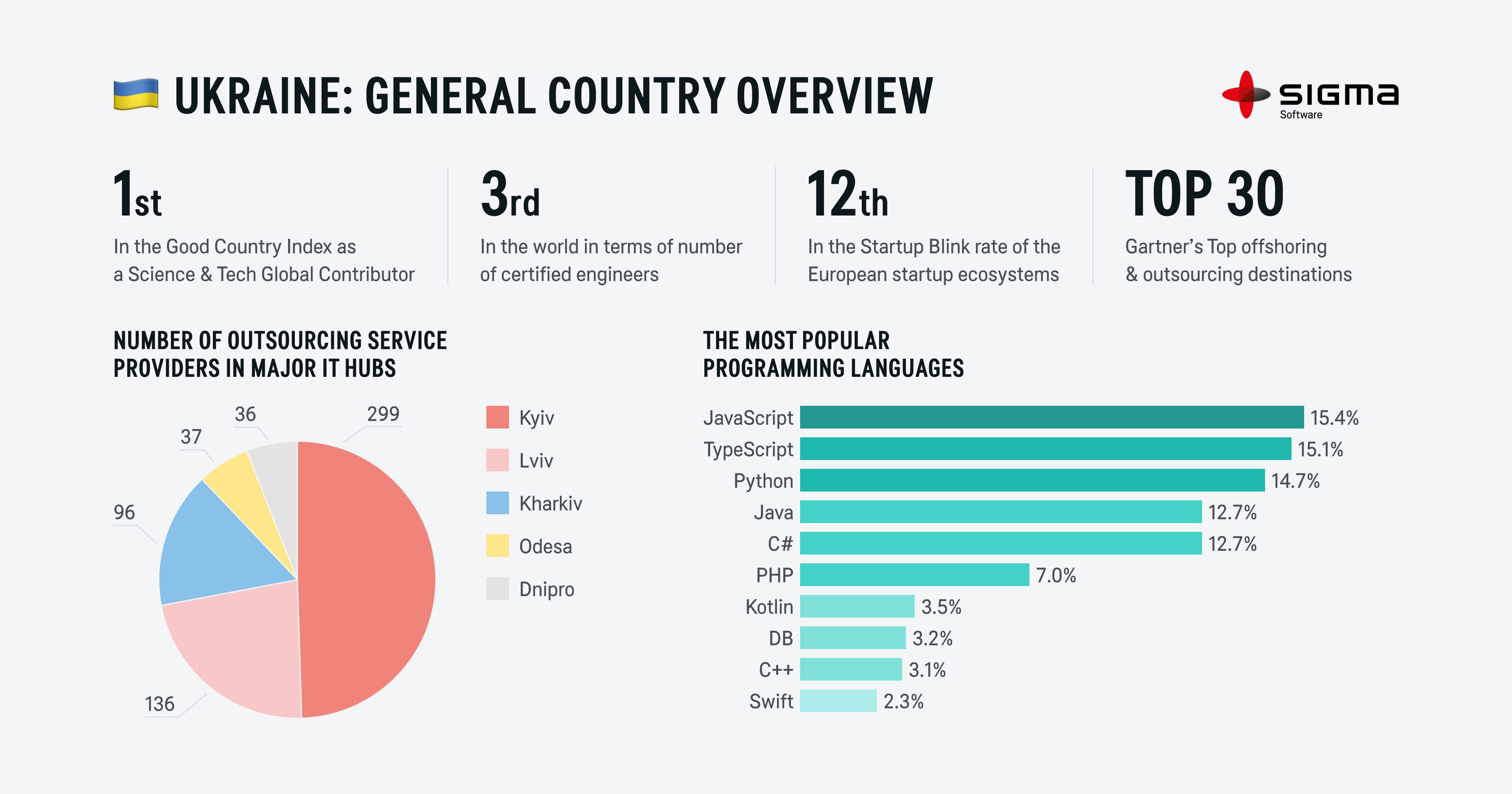
Over the past two decades Ukrainian IT industry has developed by leaps and bounds, having grown over 60 times, from $110 million in 2003 to about $7.48 billion turnover in 2024. As of January 2025, the 50 largest Ukrainian IT companies collectively employed about 79,648 specialists, nearly 43% of whom have 6 years of experience in the industry, while around 8% have been working within the IT sector for over 15 years.
The country is home to more than 110 R&D centers of international companies, including Microsoft, Dell, Cisco, SAO, etc. The Ukrainian IT industry accounts for about 4% of the country’s total Gross Domestic Product, and its IT service exports totaled $6.45 billion in 2024.
Here are some more facts in favor of outsourcing to Ukraine:
- Ukraine is in the top 30 Gartner countries for offshore services.
- In 2018, the Global Sourcing Association recognized Ukraine as the best delivery destination in the UK.
- 11 Ukrainian universities are listed in the QS World University Rankings.
- In 2025, the number of AI/ML specialists in Ukraine reached 5,200 professionals
- World-famous startups such as Petcube, Preply, GitLab, Depositphotos, and Grammarly were established in Ukraine.
The war caused many transformations, as well as brought risks for the local IT businesses. Naturally, several years of war could not impact the country’s economy. Thus, in 2024, Ukraine’s IT export decreased by 4.2% compared to the revenue in 2023. However, despite the circumstances, Ukrainian software development companies have managed to effectively overcome challenges, safeguarding stable service and business continuity. For example, Sigma Software returned to full operational capacity 2,5 weeks after the full-scale invasion.
Most organizations relocated their employees to safer places, established new offices in the Western regions of the country, and provided employees with complete support in terms of relocation, accommodation, physical & mental health recovery, etc. Their offices, equipped with power generators and Starlinks, were turned into safe hubs for the IT community.
Ukraine, so far, should still be considered as an outsourcing region with increased risks, but it is rather a question of what actions your local supplier takes to mitigate those risks. It is important to make sure your local provider has an effective BCP (Business Continuity Plan) and proactively works with risks. If so, the chances of getting your project successfully delivered from Ukraine are as high as they were before the war.
Poland
Based on: ABSL, Statista
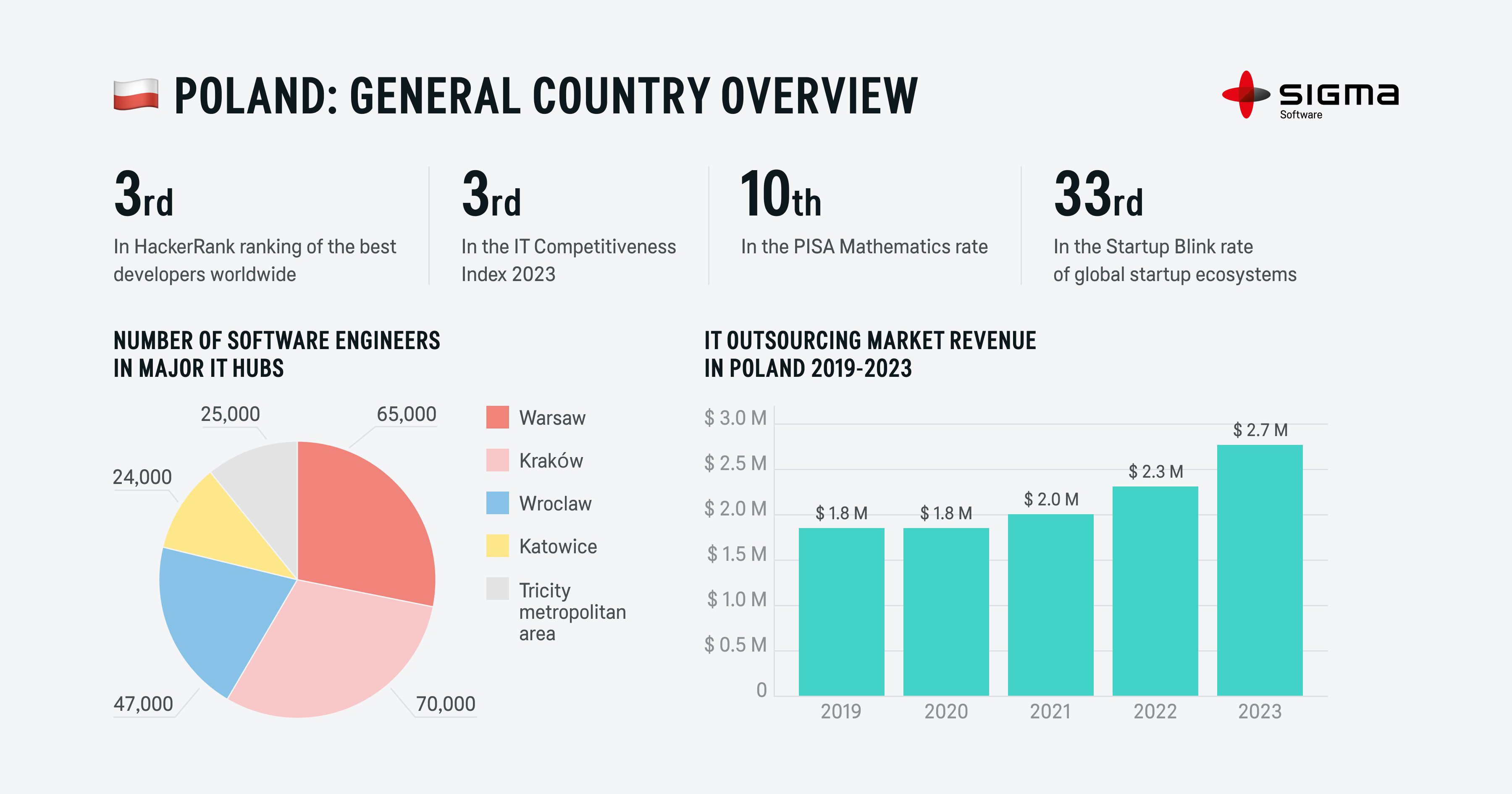
With its political stability, many years of EU membership, fast-growing economy, and experienced programmers, Poland remains one of the top destinations for Eastern European software outsourcing. The country has a clear legal system and is constantly implementing reforms to boost the business environment. Poland is the most economically advanced region in Eastern Europe and has a low inflation rate, along with tempting tax incentives for IT outsourcing agencies. This attracts global leading companies like Amazon, Google, Samsung, SAP, Delphi Automotive, Intel, and McKinsey.
According to the Statista report, Poland has 600,000 IT specialists —the largest talent pool in the region. Its growth was also caused by Ukrainian developers who relocated from the war zone in 2022, enriching Polish technical expertise and skills diversity.
The latest tendency of moving towards cloud-based services boosts the growth of Software as a Service (SaaS) and Infrastructure as a Service (IaaS) segments in the local market. Additionally, it increased the demand for cybersecurity services, as companies want to ensure a high level of security in the cloud environment.
Some more statistics:
- Poland’s total ICT market value totaled US$25.73 billion in 2024.
- Polish developers are rated 4th in the world in terms of skill level, according to the TopCoder ranking.
- The country has the largest number of unicorn startups in Eastern Europe, according to Google and Dealroom research.
- Poland ranks 16th in the EF English Proficiency Index, with the majority of the population having a good command of English.
- The country is one of the best educational centers in Europe, with 22 universities recognized in the QS World University Ranking 2024.
Bulgaria
Based on: Bulgarian Outsourcing Association, Clutch
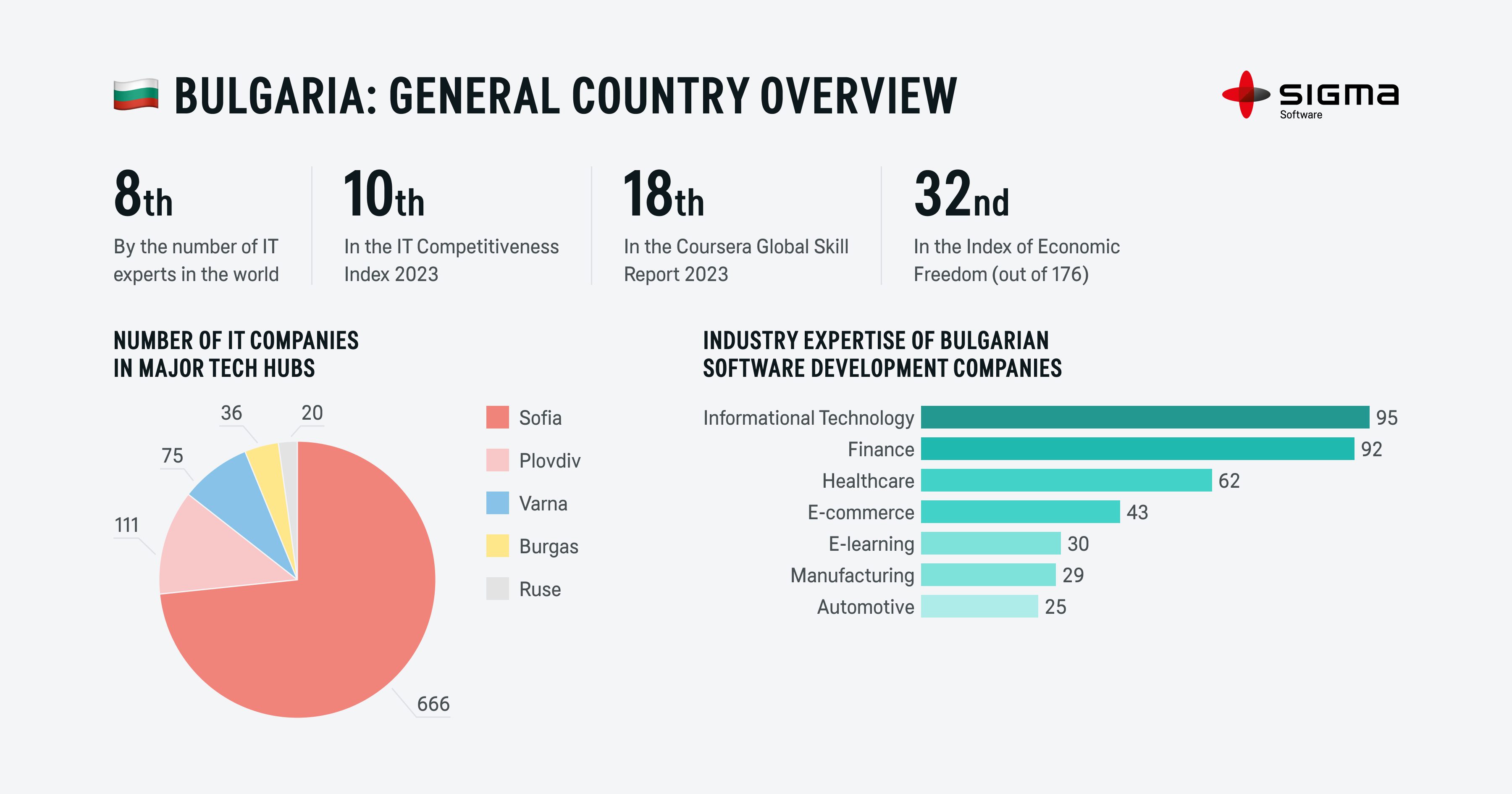
Bulgaria is a key outsourcing player with a long history in the market. Most companies choose the country for economic stability, high English proficiency, and a well-developed tech education system. STEM direction is very popular among Bulgarian students. Among the 280,000 students enrolled in universities, over 115,000 specialize in the fields of IT, Mathematics, Economics, and Administration.
Local software companies are partnering with educational institutions, as well as launching their own projects to employ young talent. The Bulgarian IT market employs about 108,600 ICT specialists, and almost 30,000 are working in IT outsourcing. The country hosts numerous R&D offices of global corporations such as HP, SAP, Oracle, VMware, CISCO, etc.
Here are some other facts:
- In 2025, the software industry revenue in Bulgaria is projected at $303.28 million.
- The Bulgarian tech sector is rapidly growing, with 451 new tech companies created in 2024, adding over 2,500 new jobs for IT professionals.
- Annually, Bulgarian universities graduate about 2200 IT specialists.
- 71% of Bulgarian Companies use English as their working language.
- In the Global Startup Ecosystem Index 2024, Bulgaria ranked 37th worldwide, establishing itself as the leader in the Balkans.
Hungary
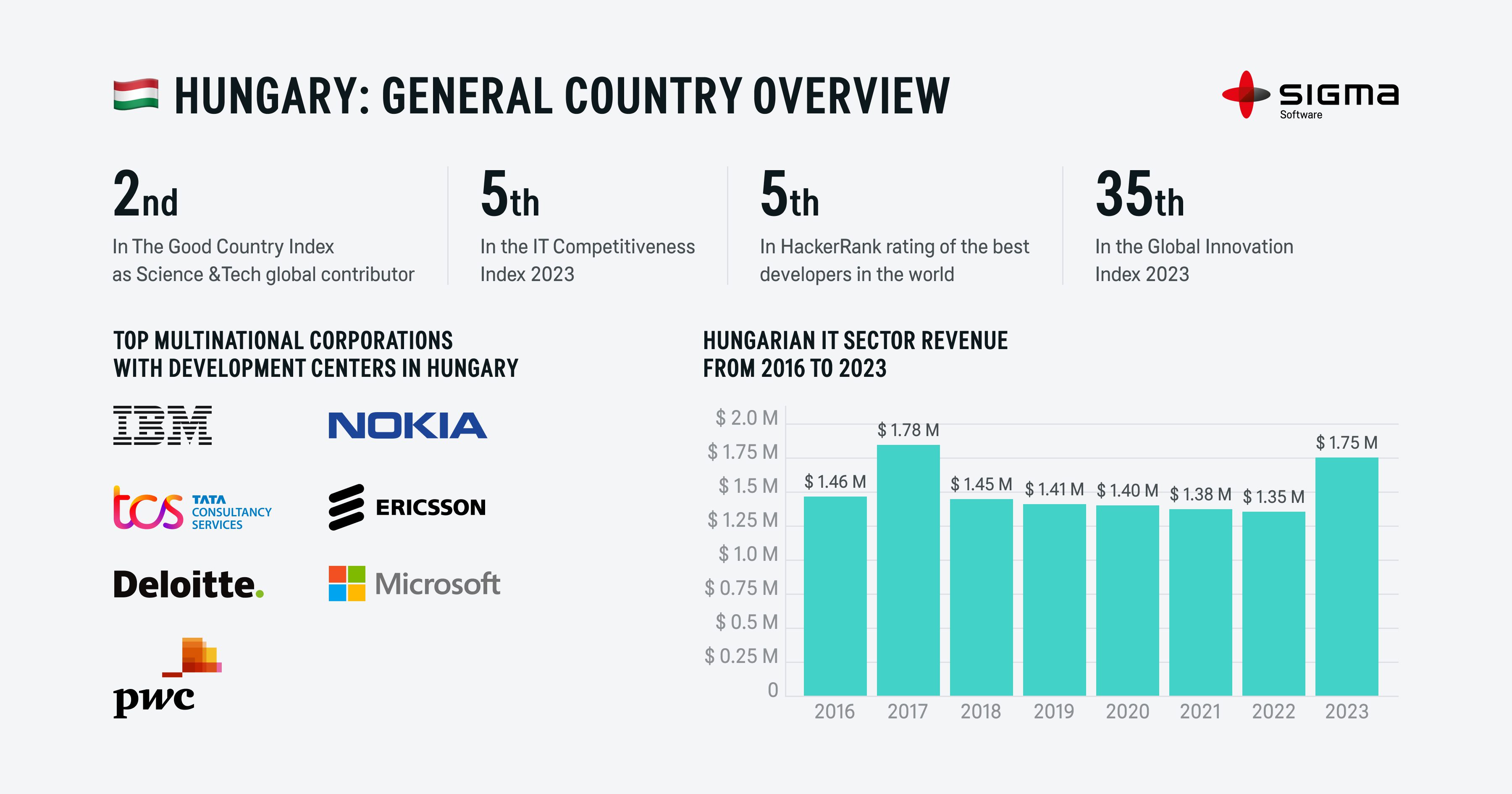
Based on: Emerging Europe report, Statista
Even though Hungary is not a mainstream destination for outsourcing in Eastern Europe, the country has one of the most dynamic IT sectors in the region. Software development services represent 6% of the country’s GDP, and this index is expected to grow over the next couple of years due to the adoption of digital transformation in the public sector and increasing investment in future technologies.
The country’s government puts a lot of effort in setting a favorable climate for the development of IT outsourcing in Hungary. They have introduced IT-friendly policies, including tax reliefs and financial support, to encourage local software companies’ growth and attract big players to enter the Hungarian market. As a result, a good deal of multinational companies like Siemens, Microsoft, Deloitte, Ericsson, and Nokia have already chosen Hungary as their outsourcing destination.
According to Crunchbase, Hungary now has over 600 IT companies participating in the booming tech industry. The country already has a talent pool of 180,900 software engineers, which is enriched by approximately 4,000 IT graduates every year. And here are some more benefits of this destination:
- The Hungarian software development market is estimated at US$412 million in 2025.
- Hungary scored 18th place in the EF English Proficiency Index rate.
- The Hungarian cybersecurity market alone is valued at approximately €50 million in 2025, with growth of a projected CAGR of around 6.5% from 2025 to 2033.
- According to StartupBlink, Hungary hosts over 400 active startups as of mid-2025, with the majority focused on software, AI, and data-driven solutions.
Romania
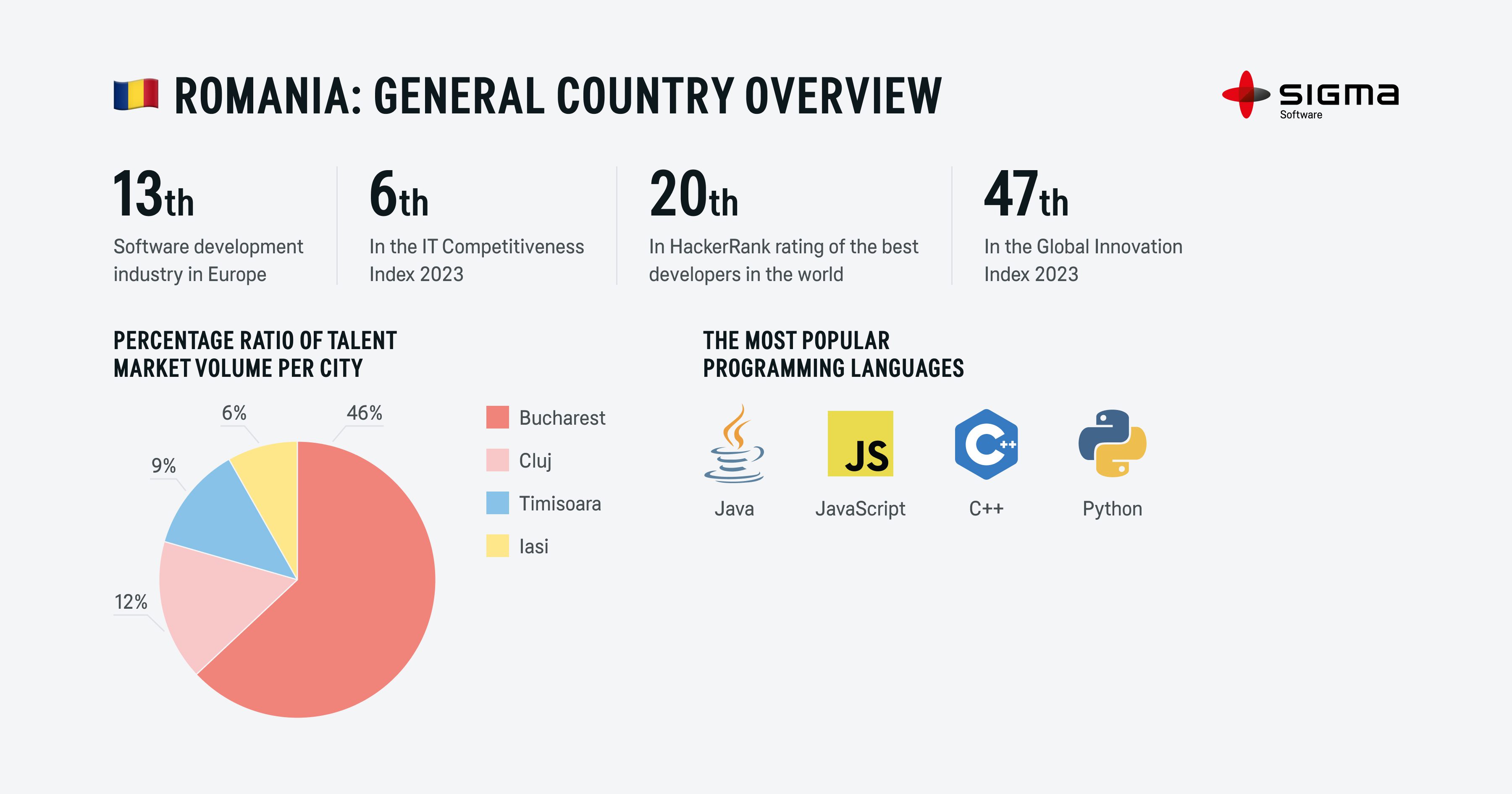
Based on: Emerging Europe report
Romania is a popular outsourcing destination that has strengthened its position in the Eastern European market even more in recent years. The country made significant progress in building a supportive environment that nurtures businesses and professional growth. Thus, now the country has over 202,000 ITC employees and almost 10,000 students with technical specialization graduating from universities annually. This helped Romania emerge as a leading destination for BPO (Business Process Outsourcing). The local specialists provide global companies with a wide range of BPO services, from human resource and supply chain management to regulatory compliance, quality assurance, customer support, etc.
Another key vector of IT outsourcing in Romania is cybersecurity. In 2021, Bucharest became the homeplace of the European Cybersecurity Industrial, Technology & Research Competence Center, and the EU hub that allocates funds to coordinate cybersecurity research across Europe.
Romania’s government introduced favorable tax conditions to encourage investment in technology and to keep pace with other countries in attracting software companies in Europe. The incentive is working, and IT outsourcing to Romania is getting more popular, attracting prominent technology companies such as Microsoft, Oracle, IBM, and HP.
Here are some other highlights:
- The IT Services market in Romania generated US$1.36 billion in revenue in 2025.
- According to HackerRank, Romania ranks 20th in the world in terms of the number of skilled developers.
- In EF English Proficiency Index, Romania is 15th out of 112 countries.
- Romania is ranked 10th in Europe and 30th globally in a list of the most favorable outsourcing destinations according to Kearney Global Service Location Index 2023.
Czech Republic
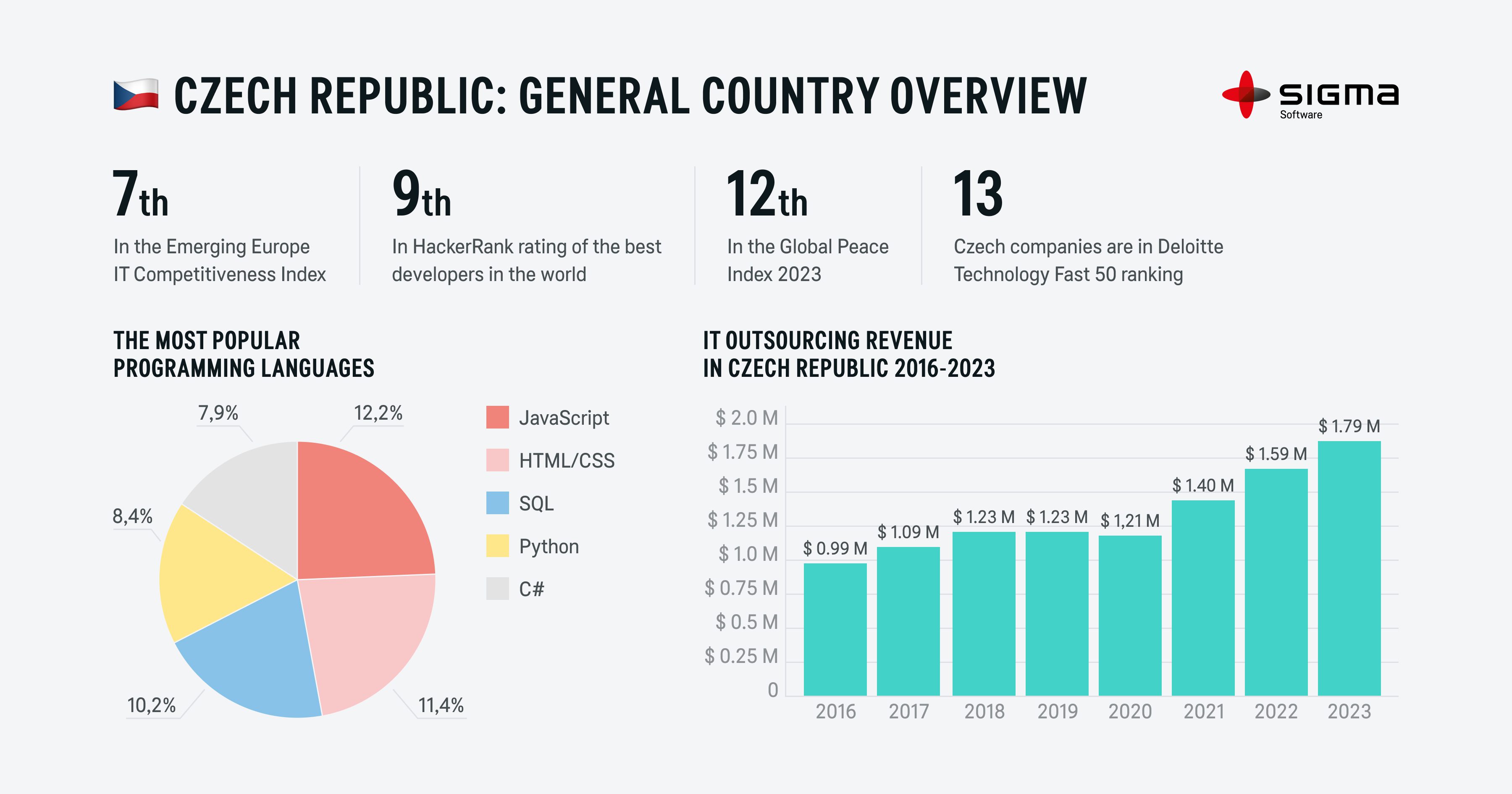
Based on: Emerging Europe report, Statista
The Czech Republic is a favorite outsourcing destination for many IT companies around the world due to its convenient location, English proficiency, and Western-oriented culture. The Czech talent market has 150,000 specialists working in the information and communication sectors.
Czechia joined the EU in 2004 and has a stable legal environment with favorable economic conditions. Hence, today the country’s business environment is named the most favorable for the IT sector in Europe according to Emerging Europe Report 2023. This attracts leading global tech organizations such as Microsoft, Google, Oracle, Skype, and IBM to choose the country for both direct investment and outsourcing.
The Czech Republic’s fintech company FTMO experienced 25 255% revenue growth and became a three-time winner of the Technology Fast 50 Central Europe ranking by Deloitte. However, outsourcing software development to the Czech Republic is more expensive than for example, Ukraine or Romania.
Some more statistics:
- In 2025, the software market revenue in the Czech Republic is estimated at $1.91 billion, based on Statista.
- According to the Social Progress Index the country holds 2nd place in the Eastern European region.
- In the Global Innovation Index 2024, the Czech Republic ranks 30th in the list of global economies and places 19th among European countries.
- In the latest ranking of startup ecosystems by Startup Blink, the Czech Republic ranks 32nd worldwide and 4th among Eastern European countries.
Which Eastern European Country Is Best For Software Development?
Based on both our study and feedback from our clients on software development outsourcing in Eastern Europe, here are some core highlights of these destinations:
| Criteria | Ukraine | Poland | Bulgaria | Hungary | Romania | Czech Republic |
| Size of talent pool | 285.000 | 600.000 | 108.000 | 120.000 | 202.000 | 150.000 |
| EU Membership | Candidate | Member | Member | Member | Member | Member |
| Major IT Hubs | Kyiv Lviv Dnipro Odesa Kharkiv | Warsaw Krakow Wroclaw Lodz Poznan | Sofia Varna Plovdiv Burgas | Budapest Pécs Szeged Debrecen | Bucharest Cluj-Napoca Brasov Timisoara Iasi | Prague Brno Ostrava |
| Rates correlation | $$ | $$$$$ | $$$ | $$$$ | $$ | $$$$ |
| Time zone | (GMT+3) | (GMT+2) | (GMT+3) | (GMT+2) | (GMT+3) | (GMT+2) |
The driving force and the main competitive advantages of Eastern European countries are the vast talent pool, technical proficiency, and reasonable development costs. Therefore, outsourcing software development to Eastern Europe ensures that you get not only a talent provider, but a reliable technical partner that shares your business culture and cares about the success of your product.
Even though each destination has its pros and cons, the region in general is very strong and inviting. Lately, many of our clients have been looking for outsourcing providers across the entire Eastern European region, regardless of the country.
Moreover, remote work has tangibly changed cooperation with distributed teams, and the Smart-shoring approach, which has been introduced recently, is becoming more popular. We at Sigma Software, actively use this approach as it allows us to build efficient international delivery centers powered by talented people from all over the world to deliver thousands of successful projects.
Today, there is no need to focus on choosing a specific country. Many outsourcing providers expand their presence in the region and globally. This unlocks the opportunity for clients to hire talented people in multiple countries while staying with one reliable partner.
Why choose Sigma Software as an IT outsourcing development company in Eastern Europe?
Sigma Software has been delivering outsourcing services for over 20 years and has been included in IAOP Top 100 Outsourcers list for 7 years in a row. We apply a Smart-shoring approach to effectively build and coordinate international distributed teams for our clients all over the world. This allows us to match our clients’ needs and expectations, resulting in a 98% client satisfaction rate according to our latest survey.
Sigma Software in numbers:
- We are a reliable partner for more than 300 leading global companies, including AstraZeneca, AOL, Scania, IATA, SAS, IGT, Formpipe, DanAds, etc.
- Sigma Software employs 2,000 software specialists with extensive technical experience in leading technologies, including Java, .NET, Node.JS, React Native, Angular, Golang, Python, iOS, Android, and more.
- We have a local presence in 19 countries on 4 continents with 42 offices including Ukraine, Romania, Bulgaria, the Czech Republic, Hungary, and Poland.
- Sigma Software expert team can deliver over 40 services, including Software Product Development, Application Implementation and Managed Services, Legacy Migration and Modernization, and Technology Consulting.
If you are planning to hire a dedicated team or outsource development to Eastern Europe, or are hesitating about which country to choose, contact our team, and we will provide a solution tailored to your business needs.