
USA
Thank you for reaching out to Sigma Software!
Please fill the form below. Our team will contact you shortly.
Sigma Software has offices in multiple locations in Europe, Northern America, Asia, and Latin America.
USA

Sweden

Germany

Canada

Israel

Singapore

UAE

Australia

Austria

Ukraine

Poland

Argentina

Brazil

Bulgaria

Colombia

Czech Republic

Mexico

Portugal

Romania

Uzbekistan
3 min read
Commercial vehicles are saturated with technology, yet many of them are ignored. Not because drivers don’t care, but because driving demands full attention. This is why the central challenge of AI in commercial vehicles isn’t adoption but design. The industry keeps asking how to teach drivers to use AI, when the real question is how to build AI that requires no adoption at all.
Trucks already produce enough data to identify early signs of component wear, and AI can transform that data into simple, actionable clarity: what needs attention, when it becomes risky, and where it can be fixed. No dashboards, no training, no “AI moment”, just fewer breakdowns. Low adoption isn’t a blocker; it’s a signal about where AI should, and shouldn’t, appear.
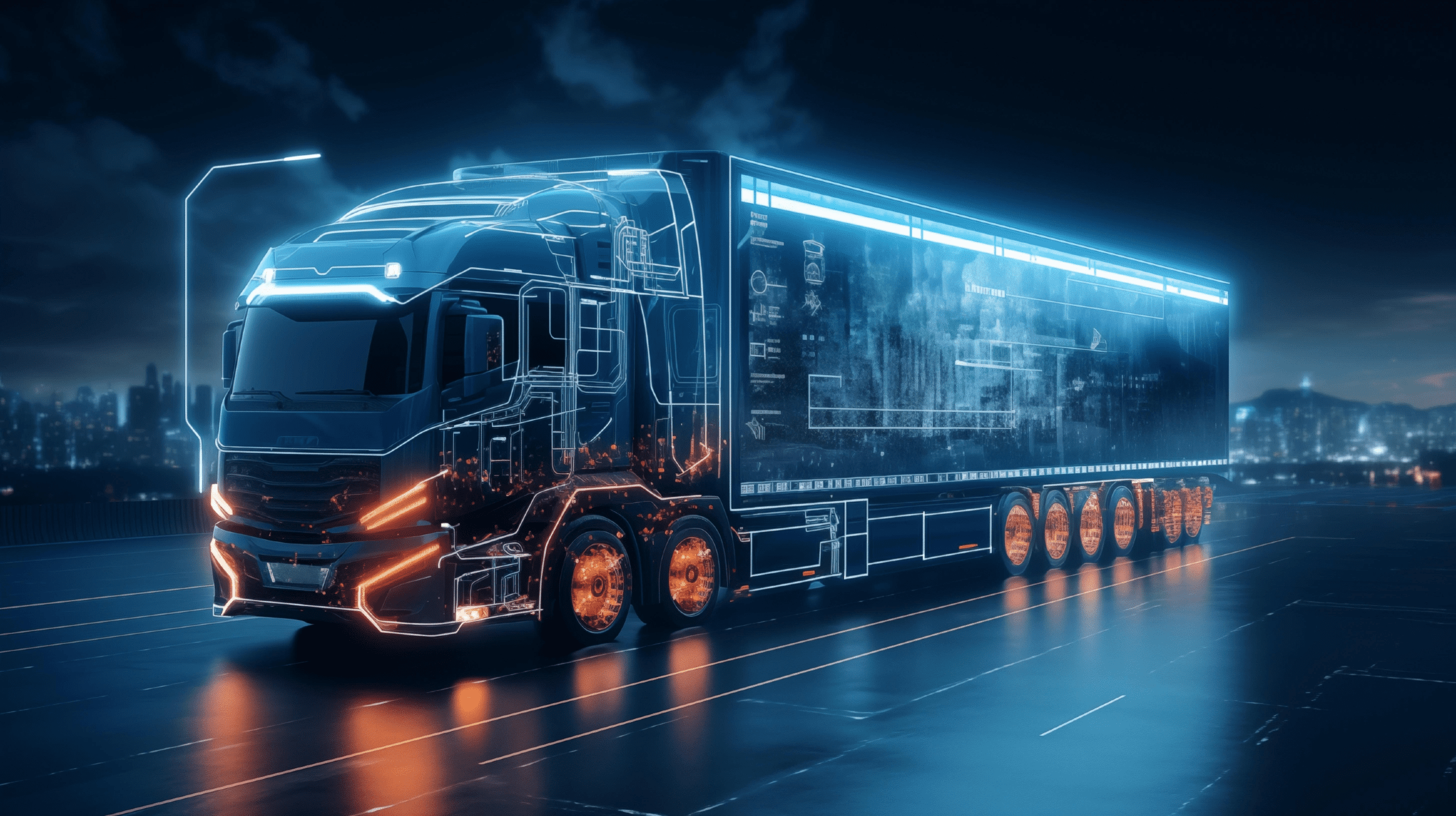
Telemetry has matured to the point where data isn’t the differentiator anymore. Decisions are. Fleets already collect immense amounts of vehicle data, but the real value is in converting “something is wrong” into a specific, prioritized, and contextualized action. AI can isolate the exact faulty component, determine urgency, and predict consequences. When maintenance shifts from reactive to predictive, downtime drops, repairs become planned, and operations stabilize. OEMs and fleet operators stop thinking about sensor density and begin thinking about business impact.
But even precise detection raises the next operational question: what now? Traditionally, the gap between diagnosing a problem and resolving it is clogged with phone calls, paperwork, and manual coordination. AI can close this loop. Once an issue is identified, the system can determine the required part, trigger ordering through an e‑commerce platform, recommend a workshop with availability, and route the vehicle with minimal disruption.

For fleets, this means fewer surprises. For OEMs, it enables new service and aftermarket models. For drivers, it quietly removes friction they never wanted. Each step seems small on its own, but together, they fundamentally reshape how maintenance flows through an organization.
The interface layer is evolving as well. Most fleet software still assumes users will interact with screens, but truck drivers rarely do. Voice changes that dynamic by fitting naturally into the vehicle environment. Instead of navigating menus, drivers can receive spoken guidance on what’s wrong, what requires attention, and what will happen next, without stopping or searching for information. It’s not a flashy feature; it’s a practical adaptation to the reality of commercial driving.
The broader shift is clear: the next era of commercial vehicle AI won’t be built on dashboards or interfaces that demand attention. It will be built on systems that operate in the background, compress data into decisions, automate the steps that used to be manual, and close loops end‑to‑end. The industry spent a decade building tools for people to use. The next decade belongs to companies building tools that work on their own.
See also: From Simulation to Reality: Building Predictive Maintenance for Connected Vehicles

Denys joined Sigma Software Group in 2005 as a Junior .NET Developer and has grown with the company into the role of Program Manager, combining a strong engineering background with program and delivery leadership. Together with his teams, he helps some of the world’s largest and most well‑known automotive and aviation companies optimize operations, reduce costs, and increase efficiency. His teams specialize in the Microsoft technology stack, supporting clients with cloud migration, cloud hosting cost optimization, and post‑production support and maintenance. Over the past several years, they have also been actively working in the areas of predictive maintenance and AI‑driven solutions, enabling businesses to improve performance and achieve greater operational efficiency. In parallel, Denys and his teams are increasingly focused on applying AI to software delivery itself — enhancing SDLC efficiency through AI‑assisted development, testing, and operations. This approach allows his development teams to build and maintain software solutions for customers with reduced delivery effort, shorter timelines, and lower overall cost.


Most AI assistant deployments start with a question: what can we give this system access to? The more data, the better the answers. That logic is correct – and ...

Biotech executives face a massive data problem. The issue is not gathering information. The issue is making that information useful. Clinical trials slow down b...

Healthcare leaders need to switch from billing for services to getting paid for patient health. Artificial intelligence offers specific tools to manage this shi...
