Engineering teams are moving from AI-assisted coding toward increasingly autonomous development workflows. But what does this shift mean for software quality, engineering roles, and the next generation of developers?
Does Faster Prototyping Lead to Better Software Products?
How Do You Know AI-Generated Code Is Good?
Is the Software Engineer’s Role Becoming More Valuable in the Age of AI?
How Can Junior Software Engineers Develop Skills in an AI-Driven Development Environment?
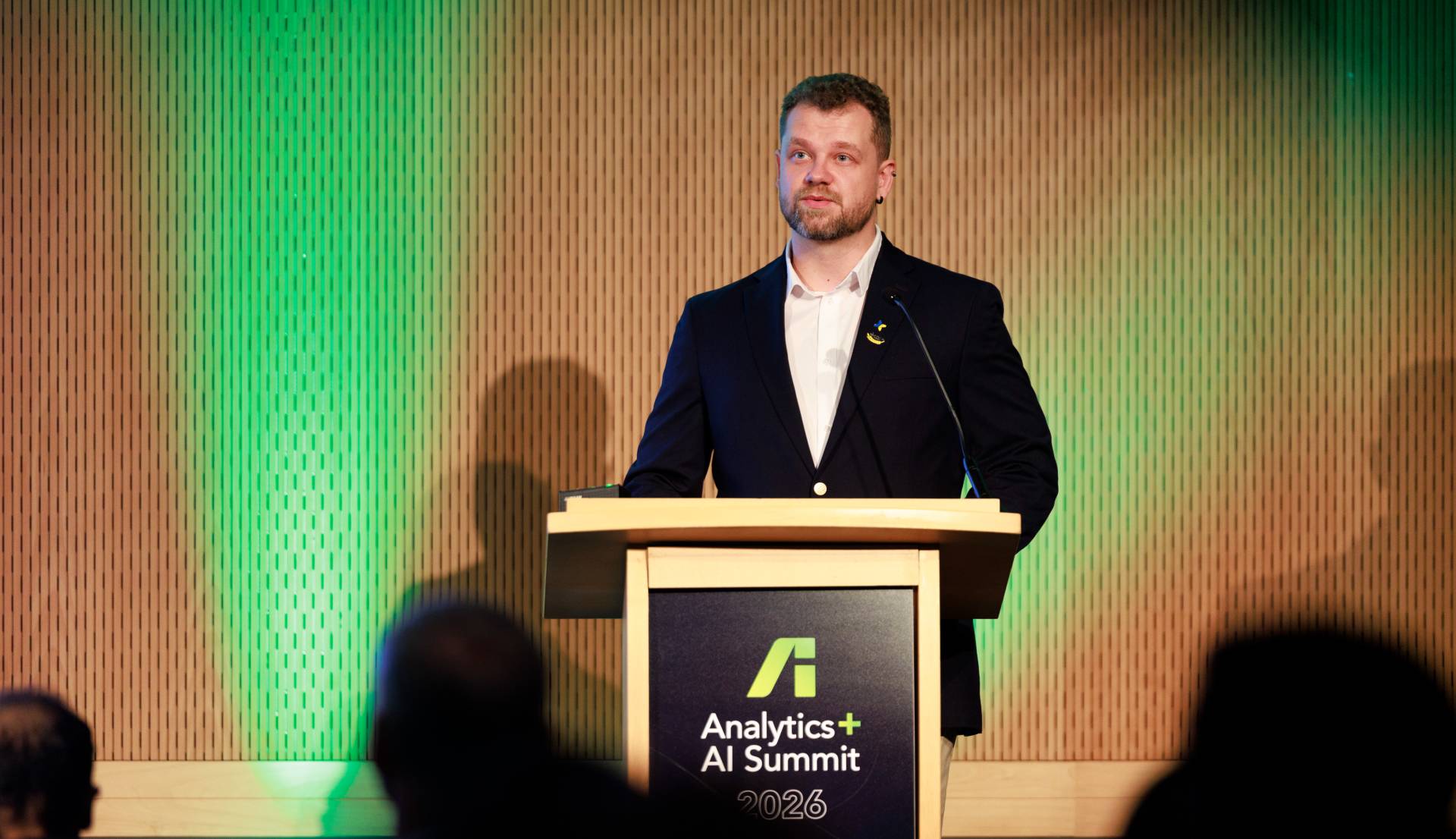
At AI Practitioner Summit 2026, engineering and product leaders from Three Byte, Tabs, T-Mobile Advertising Solutions, and FreeWheel shared their experiences, challenges, and perspectives on the future of AI-driven software development.
Moderator: Michael Gelb, SVP, Growth & Product, DanAds
Panelists:
- Olaaf Rossi, President and CTO, Three Byte
- Leo Shklovskii, VP Engineering, Tabs
- Tom Fleischer, Head of Technology, T-Mobile Advertising Solutions
- Jeff Ellin, Vice President, Product Architecture, FreeWheel
The panelists started by sharing how they use AI in their work, revealing just how different their approaches are. Olaaf Rossi has moved to a fully agentic workflow, where AI handles everything from planning to delivery. Leo Shklovskii’s team also relies heavily on AI, but keeps humans involved in code review. Tom Fleischer described a spectrum of AI adoption across his team, from Luddites to AI-hobbled and AI-augmented engineers. He pointed out that AI doesn’t always make engineers more productive: sometimes relying on it creates more work than it saves. For Jeff Ellin, AI has opened up new possibilities in product management, making it easier to build prototypes and test ideas with customers.
Key Takeaways
- AI is accelerating software development, but human oversight remains essential for architecture, quality, and business context.
- Agentic development workflows are increasing productivity but introduce new quality assurance challenges.
- Senior engineers may become more valuable as AI handles implementation tasks.
- Organizations face growing concerns about how junior engineers develop expertise in AI-driven environments.
- Future engineering teams will likely combine AI agents, domain experts, and cross-functional contributors.
Does Faster Prototyping Lead to Better Software Products?
Michael Gelb: Jeff, you mentioned that you can now come up with an idea, build something, and potentially turn it into a real product. What does that look like in practice?
Jeff Ellin: We have a very large set of APIs across our products. Some customers are technically advanced enough to build an MCP server themselves, but others aren’t. So, a colleague and I created an MCP server that exposed all 600 APIs as tools. Then we gave customers access to it to see what they would actually do.
Some used it for AdTech operations. Others found ways to improve their QA processes before going live or to better understand their direct-sold versus programmatic advertising business.
There were many use cases we hadn’t anticipated. We could take that knowledge back and potentially develop products around them.
Olaaf Rossi: That’s a really positive outcome. What I see quite often is what I’d call feature frenzy. Someone comes up with an idea in the shower, thinks it’s the greatest idea ever, and spends two days building it without considering whether anyone would pay for it.
Tom Fleischer: What I like about your example is that you’re using the prototype to learn about customer behavior and then feeding that knowledge back into product development. My concern is about everything downstream. If you have an MCP server exposing all the company’s APIs, you need a sophisticated testing framework. In AdTech, if someone enters the wrong instruction or an API does the wrong thing, you could lose $3 million in 20 minutes.
How Do You Know AI-Generated Code Is Good?
Michael Gelb: We can now generate thousands of lines of code in an hour. But how do we know that code is actually good? How do we know it’s better than what a human would produce?
Olaaf Rossi: In my workflow, one agent writes the code, and another reviews it. For example, if Claude writes the code, I have a review agent that spins up specialist testing agents and opens an adversarial review using Codex. One of the agents focuses specifically on simplification. The review process gives the pull request a score from zero to ten.
Michael Gelb: And what’s the threshold for approval?
Olaaf Rossi: There’s no automatic approval unless it scores at least nine. It also has three opportunities to iterate and improve the result. Of course, that burns tokens.
Leo Shklovskii: Quality is a major challenge because so much code is being generated. We recently had a pull request with a basic two-line code change and another 120 lines of changes to the tests. At that point, you have to ask what’s actually happening. Why are the tests changing so much because of a two-line fix?
In this case, neither the engineer who made the change nor the person who approved the pull request had really investigated it. The change went through, the bug was fixed, and life went on. Sometimes that’s fine. It was a minor issue. But sometimes the consequences are much more significant.
You still need a human who understands the context and can recognize that a seemingly small change might have a much bigger impact than the agents realize. That’s one of the biggest challenges in maintaining quality.
Is the Software Engineer’s Role Becoming More Valuable in the Age of AI?
Michael Gelb: Olaaf, you mentioned that you don’t write code by hand anymore. How has your role as an engineer or architect changed?
Olaaf Rossi: Today, I don’t even do QA manually. I have a specialized QA agent that opens headless Chromium browsers and runs tests. When I create a specification, there’s also a QA test plan. I use separate Git worktrees, each of which is tested before merging. Then another round of tests runs after the merge.
One interesting consequence is that I can’t really use my laptop for development anymore. I need a machine with 96 cores and 128 GB of RAM because tests are running constantly.
Tom Fleischer: I think any engineer knows there’s a difference between a software engineer and a coder.
The value of a good engineer isn’t their ability to type characters into an editor. Their value is understanding requirements and knowing how to architect an effective solution at a higher level.
That’s what people should focus on. AI allows engineers to spend less time typing and more time thinking about those things.
Olaaf Rossi: For example, I’m working on a project for an event venue where we’re controlling a camera. The initial camera happens to be a Panasonic, so the AI agent named the class PanasonicCamera.
And I said, no, that’s the wrong abstraction. That camera will probably be replaced in five years. Then the class name won’t make sense anymore. What we actually need is a camera interface, with Panasonic as one implementation.
Tom Fleischer: I think AI increases the value of good engineers rather than decreasing it. But in the hands of someone without much experience, relying on it for everything can be dangerous.
How Can Junior Software Engineers Develop Skills in an AI-Driven Development Environment?
Michael Gelb: Senior software engineers seem to be benefiting enormously from these AI tools. But what about junior software engineers? They have access to the same technology, but they don’t necessarily have the experience that senior engineers have developed over the years. What advice would you give them?
Leo Shklovskii: I think it’s a huge challenge, and I don’t have an answer.
As a senior engineer, you understand when something goes wrong, when a tool does something incorrectly, or when there’s a better approach. As a junior engineer, you don’t necessarily know those things. You run the tool, everything looks green, and you move on.
I had a mid-level engineer on my team come to me and say: “I take a ticket description written by Claude, give it to Claude, get code back, give that code to Claude for review, and then Claude commits it. What did I learn?” And they’re absolutely right.
My response was: don’t do that. Take part of the task and do it manually. But then the counterargument is: I’ll fall behind my peers because they’re all using AI.
So how do people grow? What skills do they develop? How do they learn to recognize that a camera will eventually be replaced and shouldn’t be hardcoded into the architecture? Those are things we learned through experience, often by making mistakes early in our careers. I don’t know how you develop that judgment when the AI tool immediately does the work for you.
Olaaf Rossi: Someone in the audience asked a similar question earlier, and most of the responses focused on domain expertise. I think that’s half the answer.
There’s also a strong argument for teaching software engineers how LLMs and classical machine learning actually work.
Understanding the mathematical concepts behind these technologies could be more valuable for their careers than learning a particular programming language. But understanding the fundamentals, together with domain expertise that develops over time, is probably the best suggestion I can offer.
Tom Fleischer: I think the junior engineer problem is genuinely a crisis. We had a large group of interns this year, and when I talked to them, they were terrified. They didn’t know what to do. The industry needs to think about how senior engineers can mentor junior engineers to use these tools effectively and develop an understanding of the business. And I don’t know the answer.
Leo Shklovskii: This problem existed before LLMs. Companies have always had to decide whether to invest in developing people or simply hire the skills they need. But LLMs have made the problem much sharper and more urgent.
You might have a mid-level engineer who isn’t growing. Then your senior engineer leaves. Now you have to hire another senior engineer from outside the company, someone who doesn’t have the same organizational knowledge. And that’s difficult. If you’re running an engineering organization, you want to grow your own leaders.
Olaaf Rossi: There’s also an economic argument here. I read a book called Prediction Machines that used photography as an example. By the 1960s, chemical photography was already producing beautiful results. But as computing became cheaper, photography moved into the digital domain, even though capturing and processing images digitally was a much more difficult technical problem.
Economics transformed the industry. You could make a similar argument about software engineering.
Tom Fleischer: There’s a strong argument that there will simply be fewer junior engineers. I don’t particularly like that possibility.
As a manager, I want people to succeed. But ultimately, the question is whether the industry is going to invest in a future that still involves developing human expertise.
What Will Software Engineering Teams Look Like Next Year?
Michael Gelb: AI development is moving incredibly quickly. Our workflows have changed dramatically over the past year. Do you have any predictions for what comes next?
Tom Fleischer: I think we’ll see a lot of failed startups, probably more than usual, and a lot of bugs escaping into production. Then things will likely normalize.
Jeff Ellin: I think roles within companies are going to overlap much more.
Product designers will be able to do software engineering work. Product managers will be able to do product design. People in finance will be able to solve problems for themselves.
Instead of always relying on engineering or buying software to improve an individual task, people will be able to create much more customized solutions. Organizations may increasingly build products that allow employees to customize their own jobs.
Tom Fleischer: I agree, but I’d phrase it a little differently.
Product designers can do engineering work or development work. That doesn’t necessarily make them engineers. There’s still a need for specialists in every area.
Jeff Ellin: Absolutely. I’m not suggesting that specialization disappears.
But AI gives people the ability to do things that previously required another team. Our product designers can now create prototypes that are much closer to working software rather than just wireframes. And they can do it much faster.
Leo Shklovskii: It’s very hard to make predictions right now. But I remember reading a book about learning Python many years ago. At the end, the author basically told readers not to become software engineers unless they were really passionate about it.
Instead, he suggested becoming a doctor who codes, a lawyer who codes, or someone who uses programming to improve whatever profession they’re already in.
At the time, that seemed like an interesting idea. Now it’s becoming a reality. You don’t have to be a professional software developer to use the power of technology. You can connect systems, automate tasks, or build something around an Excel spreadsheet. People now have capabilities that were promised years ago but weren’t really accessible.
I think we’ll see many more small, useful tools built by people who aren’t software engineers.
Not everything has to be perfectly engineered, scalable, and capable of handling millions of users. Sometimes you just need something that makes your work or your life easier.
Olaaf Rossi: I can’t make predictions, but I think that brings us back to understanding the problem you’re trying to solve. I recently saw an article about an iPhone application for skiing navigation. It was beautifully designed, with a great interface.
Then there was a photograph of skiers at the top of a mountain, wearing all their skiing equipment and gloves, unable to use the application.
So, what was the point? You can build a beautiful application, but if it doesn’t work in the real situation where people need it, you haven’t solved the problem.
That’s where domain expertise becomes incredibly important. An engineer can go out, observe how people actually work, and develop a solution based on that understanding. Or a doctor, for example, might build a solution for a problem they understand from their own experience.
Things are changing incredibly fast, but understanding the real problem still matters.