Most enterprise AI programs promise to make work faster and cheaper. As AI removes long-standing constraints around time, cost, and expertise, organizations are being forced to revisit assumptions that shaped the way they work for decades.
When Old Ways of Working No Longer Make Sense
AI Is Changing the Value Companies Deliver
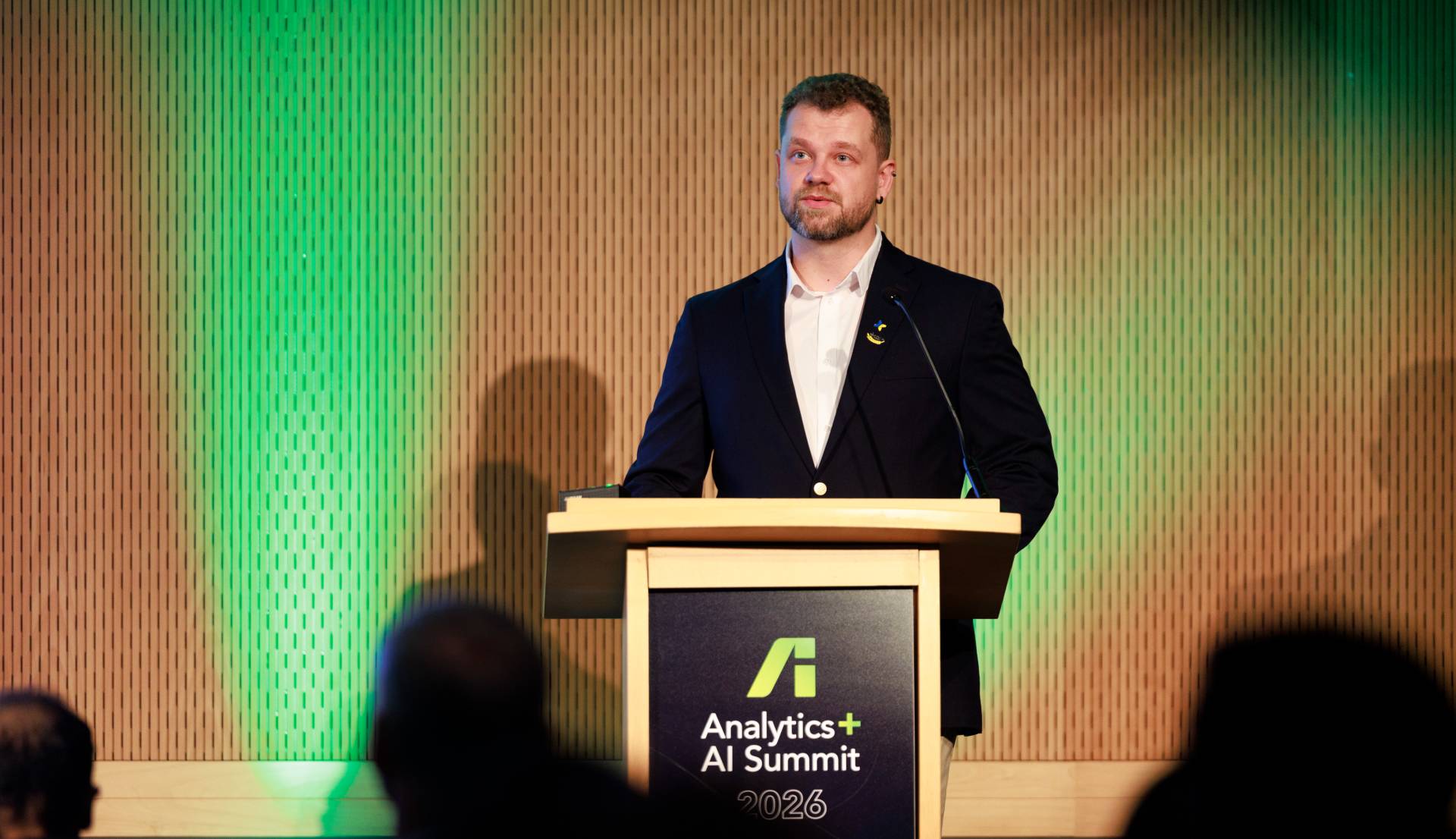
At AI Practitioner Summit 2026, the panel “Operational Transformation and the Role of AI” explored what it takes to go further: rethinking how work is organized, how decisions are made, and how value is delivered to clients.
Moderator: Manny Flores, US Head of Transformation, AI & Business Intelligence at Ipsos
Panelists:
- Julie Gordon, Senior Programmer Writer at DocuSign
- Oleg Korenfeld, Group President, Technology & Platforms at CMI Media Group
- Wei Wei, Co-Founder & CTO at Firsthand
Key Takeaways
- AI is opening up possibilities beyond automation. From adjusting advertising messages while campaigns are running to exploring hundreds of research directions overnight, companies can now do things that were previously impractical.
- AI changes not only processes but also what companies sell and how they charge. A process can be automated quickly, while agreeing on a new commercial model with clients can take a year.
- AI is challenging long-established ways of working. As technology removes previous constraints on time, cost, and expertise, organizations need to reconsider which processes, practices, and decisions still make sense.
- Successful AI adoption starts with solving real business problems. Focusing on specific challenges, demonstrating tangible results, and encouraging experimentation can help organizations move beyond the hype and identify opportunities to scale.
- Responsible AI adoption requires clear guardrails and human oversight. Organizations need to protect sensitive data, ensure its quality, and define where AI can make recommendations and where decisions must remain with people.
When Old Ways of Working No Longer Make Sense
Manny: When Sigma Software asked me to moderate this panel, the topic was efficiency.
AI can transform an organization, but if you’re not examining the operating model you’re making efficient, you’re just scaling the dysfunction you’ve built over time.
The one KPI I’m measured on is speed, and efficiency is an outcome of speed. When we’re asked to move faster, transformation becomes about reinventing the operating model so we can work smarter and faster.
Julie, if we think beyond efficiency, where do you see AI having the biggest impact on speed in your organization, or with the clients you work with?
Julie: My job looks completely different than it did a year ago, entirely because of AI. Every time I approach a task that traditionally had a defined set of steps, I throw that playbook out the window. I ask myself how I can do it better with AI, improve the outcome, and reduce errors. We’re no longer constrained by the way we’ve always done things.
Another big change is that the boundaries between skill sets have broken down.
There’s almost nothing anyone can ask me to do in my daily job that I can’t do with AI, even without a background in it.
I’m almost never blocked waiting for someone with specific expertise who has 40 other things to do.
Manny: Wei, Julie and I both work at mature organizations, where we have to go back and reverse-engineer our processes to get to reinvention. You’ve had two startups, where reinvention starts from day one. Can you answer the same question?
Wei: A lot of the judgment calls we made as engineering leaders were based on the assumption that building software was the longest and most expensive phase. Over the years, those decisions became almost muscle memory. Now the build phase is much faster and cheaper. So we need to question why we made those decisions in the first place and rethink them if the assumptions no longer hold.
For example, a year ago, some engineers insisted on reviewing every change made by AI. Now we’re asking whether we need code review at all, and where it should happen. We’ve changed our approach: instead of looking at every line of code, we focus human review on design, architectural decisions, and schemas. Those are the things we make more visible and actually review.
The same logic applies to our business model. Originally, we planned to build software as a service, a UI that clients would use to run their advertising. But over the past year or two, we decided not to expose it to clients at all.
It’s service as software, not software as a service: if AI makes your internal operations that efficient, it’s better to run the software yourself and offer the service.
That’s a good model for now, but I don’t know if it will be in two years.
Manny: Oleg, same question. Where is AI having the biggest impact on performance in your organization?
Oleg: In the media agency business, speed matters, but so does accuracy. A campaign launched differently from what the client approved can waste a couple of million dollars within days, before anyone notices. Historically, there were people to blame for that. When you automate the process, you can’t blame a machine.
Automation lets us remove people from very manual processes, because people are often the source of mistakes. But it also forces us to rethink how we charge clients. Media agencies have historically been paid like law firms, by the hour, so the client’s first reaction is: if you automated 50% of the work, we should pay you half. In reality, we now pay for software and the specialists who support it, and they cost far more than the people who did the work before. At first, you want AI, but a junior labor force is actually cheaper.
Over time, the value of speed to market and accuracy justifies the investment. But changing how clients pay takes much longer than implementing the technology itself. In healthcare marketing, we can introduce a new process quickly, and then spend a year convincing clients to pay for it differently.
AI Is Changing the Value Companies Deliver
Manny: Oleg raised an important point about how clients perceive the value of automation, and that’s something I wanted to discuss as well. When management consultants moved from hand-built spreadsheets to software, they didn’t charge less. They charged more, because they could provide more premium services. I think the same will be true of AI.
But moving beyond automating existing processes, where are you seeing true reinvention happening in your organization as a result of AI?
Oleg: In the media agency business, AI is changing what we can offer clients. Traditionally, creative agencies and artists produced an ad, and media teams bought placements for it. Once the campaign launched, the creative was essentially fixed.
With AI, we can see how people react while an ad is running and adjust the message before the campaign ends. People respond differently on mobile, desktop, and connected TV, and personalizing messages at that speed is only possible with these technologies. It changes the entire process, from how creative teams develop an ad to where and how we buy media.
Manny: Creative used to be optimized mainly through pre-testing, before launch. But digital ads cost much less to produce, and we have to move much faster in the market.
Oleg: AI also helps us move beyond subjective preferences. Creative decisions can now be informed by data showing what actually resonates with audiences. You might prefer the green ad, but if the blue one performs better, you have evidence to support changing it. That also changes how decisions about budgets and creative investments are made.
Manny: Wei, how are you moving beyond automation to true reinvention?
Wei: This isn’t just about speeding things up. The sheer amount of intelligence at our fingertips is a paradigm shift that lets us do things we couldn’t do before. Andrej Karpathy, a well-known AI educator, described a wiki that continuously collects and compiles company information and makes it the context for the company’s agents. He released it not as software but as a prompt you give your agent to build your own version. I built one for our company a few months ago, and it’s becoming the context layer our agents retrieve information from.
Another idea is auto research. Data scientists and machine learning engineers have always trained models by forming a hypothesis and trying things. With auto research, you leave an agent to try hundreds of different directions at the same time overnight and figure out which works best.
I kind of feel that one criterion for a true paradigm shift is how many tokens a task burns. If it’s a few tens of dollars, it’s probably not enough.
A real shift is when you give an agent an instruction, and the tokens it burns start to hurt your wallet.
Manny: Julie, how about you?
Julie: One way AI has changed how we work is by helping us make better decisions before we even start a project. My team frequently builds demos and code examples, and choosing the wrong approach early on can cost days of work or force you to start over.
Now we can use AI to evaluate different options, compare their pros and cons, and identify potential problems before committing to a particular approach. It’s also incredibly useful for troubleshooting. Problems involving authentication, permissions, or certificates that once took hours or even days to resolve can often be diagnosed much faster with AI.
From Everyday AI to Real Business Impact
Manny: Conversational AI has changed how we find information, and many organizations also have industrial-grade agents built by engineers.
But between everyday productivity uses, like reviewing emails or summarizing meetings, and large-scale enterprise applications, there’s a missing middle: problems specific to a team, a market, or a region.
My company has 90 markets and 19,000 employees, and the number of low-code and no-code agents built with our tools is astronomical, with a lot of duplication. We encourage that: local experimentation incubates things that could scale.
Can you share some examples of missing-middle innovations that have had a significant impact on your organizations?
Wei: Reporting is a good example, once people go beyond “give me a morning brief.” Dashboards and daily reports still need someone to interpret them. Now AI can read a report and point out the insights, anomalies, and highlights. The challenge is enablement: people need agents with access to the right data and permissions, the right context layer, and training on the right tools.
Julie: People probably know DocuSign as the company that lets you sign agreements electronically. But think about what happens afterward. Organizations end up with huge libraries of signed agreements containing valuable data and insights, with no efficient way to access that information.
That’s where we see the missing middle. With AI, businesses can extract data from those agreements, identify risks, automate tasks like renewals and payments, and make that information available for reporting. At DocuSign, we’ve built these capabilities into our Intelligent Agreement Management platform, so customers can use them without needing software engineers to develop custom solutions.
We’re also making these capabilities accessible through the AI tools people already use. For example, previously, sending an agreement through the DocuSign API required building an application. Now, with the DocuSign MCP Server, users can simply ask a supported AI tool to send an agreement, and it handles the process.
Oleg: For the Seinfeld fans, I call it the “yada yada yada” process, and that yada yada yada is where most of the work happens. For us, it was campaign trafficking: setting up campaigns in the ad servers that deliver them. For a quarter century, it was a manual process, with offshore teams checking and rechecking every setup. We spend other people’s money, so a misplaced period or an extra zero is money we have to pay for. We automated about 70% of that process.
Making AI Work: Adoption, Guardrails, and Human Judgment
Manny: Oleg, what’s been most effective in driving AI adoption, both internally and with clients?
Oleg: Adoption starts with simplifying. People are overwhelmed, not only by what we tell them but by everything they read in the press. So we break AI into smaller chunks and point to very specific solutions. Campaign trafficking opened doors: people realized that their own, unrelated processes followed the same manual steps and asked us to do the same there. Showing real use cases that work is very sticky.
It also means cutting through the headlines. When Facebook announces one thing and Google another, the question is what is actually happening and what problem we are trying to solve.
Identify a specific problem, don’t go too crazy, and solve it.
Manny: Wei, how do you build the right guardrails and best practices to help teams move fast with AI while maintaining quality, security, and governance?
Wei: We give everyone generous access to work AI, so hopefully no one uses personal AI for work. We also rely on observability: agent harnesses support telemetry, so we can scan for secrets or data that shouldn’t be shared. And we distribute skills to everyone’s machine to guide standard operating procedures.
Because we build AI agents for advertisers, we also need guardrails that go beyond general safety restrictions. An agent representing a particular brand must follow that brand’s requirements and avoid making statements that conflict with its interests.
Oleg: Our clients are all pharma companies, so in a way we were prepared. We’ve always worked with highly sensitive information and strict rules about where it can be shared. When AI came along, the same principles applied: if you wouldn’t share certain data through other channels, you shouldn’t upload it to an AI tool either.
Our guardrails are prescriptive: a set of company-wide paid subscriptions where data stays within our walls, and a list of people allowed to use them. I don’t think that will fully scale in a company of 1,300 people, and we’ll need to see whether it’s cost-effective.
Manny: Looking ahead, what do you see as the biggest challenges and opportunities around data quality, structure, and accessibility?
Wei: There’s a big opportunity in bringing compute to the data. Until now, frontier intelligence has largely been available through the big AI labs, which means sending them your data. They promise zero data retention, but you can never be sure.
Countries are training sovereign models, big enterprises want their own, and open-weight models are catching up. That creates opportunities to run AI within an organization’s own infrastructure, keeping data under its control. I’m still figuring out how to capture that opportunity.
Oleg: Any AI solution is only as good as the data you point it at, and validating that data is still the human opportunity. Marketing spent 15 years normalizing data and defining quality for different use cases. Throwing that away and letting an algorithm pick whatever data it wants seems counterintuitive.
So we’re doubling down on organizing and normalizing our data and understanding where it comes from, which is a ton of work for the human side of the equation.
Manny: In updating our policies, we’ve made the roles of humans and AI explicit. Keep humans involved in as many steps as possible.
AI’s job is to make us faster, more efficient, and higher quality. It can recommend decisions but not make them.
Our policy doesn’t allow it to make recommendations to clients. If a client interacts with one of our agents, for example, through MCP, it can’t tell them what to do, even though our human analysts make specific recommendations in their reports.
So the data foundation is super important.
Read more: Your AI Compliance Budget Can Buy You More Than Compliance