Running a medical aesthetic business requires balancing patient care, inventory, compliance, and marketing. When the underlying software systems fail to communicate, it directly impacts the bottom line.
The Operational Bottlenecks of Aesthetic Clinics and How to Fix Them
Key Features of a Custom Medical Aesthetic Mobile App
Clinic operators often watch their Cost Per Lead reach $500 or more due to poorly optimized web forms. Staff members waste hours manually copying data from a booking system into a pharmacy module.
Worse, patients drop out of treatment programs simply because they lose motivation between appointments.
Building a custom mobile application changes how a clinic operates. It consolidates these moving parts into a single cohesive platform. This guide explains why off-the-shelf software fails aesthetic clinics, what specific features drive revenue, and how to approach the engineering process.
The Operational Bottlenecks of Aesthetic Clinics and How to Fix Them
Generic booking software was built for standard doctor offices or salons. It was not built for the highly regulated, high-ticket environment of medical aesthetics. Here is a breakdown of the industry’s biggest operational bottlenecks and the architectural solutions required to resolve them.
Fragmented Systems and Disconnected Data
In most clinics, the CRM, pharmacy module, clinical dashboard, and marketing analytics operate in isolated silos. When a patient books an appointment, a staff member usually has to manually enter that data into the pharmacy system. Technical failures happen constantly at these integration points. Patient data drops, leads get lost in the ether, and administrative teams spend half their day on manual entry just to keep the business running.
The Solution: Implementing a unified integration architecture eliminates this friction. Developers build a central middleware layer that acts as the brain of the clinic. When a patient updates their medical history or books a session in the app, that information instantly routes to the CRM and pharmacy module simultaneously. No manual data transfer is required, completely removing human error from the data pipeline.
Astronomical Customer Acquisition Costs
A Cost Per Lead sitting between $500 and $700 makes scaling advertising campaigns nearly impossible. Marketing campaigns might be highly targeted, but if those expensive leads land on a generic web page with a clunky intake form, they will bounce. Every lost lead is a direct loss of revenue.
The Solution: Solving this requires moving away from generic web forms and utilizing conversion-focused landing pages built directly into the app ecosystem. The user experience must be tailored specifically for a medical product. Fast load times, clinical yet modern design, and intuitive navigation build immediate trust. Optimizing this exact touchpoint lowers the acquisition cost and stops the revenue bleed.
Blindly Testing Onboarding Flows
When clinics try to improve their intake forms, they often rely on guesswork. Changing a few questions and hoping more people finish the form is an inefficient strategy. There is no visibility into exactly where users get frustrated and abandon the process. Every blind test drains the marketing budget and wastes time.
The Solution: Deploying parallel A/B testing combined with granular funnel analytics eliminates the guesswork. Clinic managers can run two different onboarding flows simultaneously. The analytics might reveal that 40% of users drop off exactly at a specific medical history question. The team can then refine that single step, fix the leak, and watch conversions increase immediately.
Need professional help with building a medical aesthetics mobile app?
The Blind Spot Between Patient Visits
Aesthetics and medical weight loss require ongoing tracking. If a patient only visits the clinic once a month, practitioners have no idea what happens during the other 29 days. Decisions regarding product adjustments and dosages are forced to be made without accurate context.
The Solution: Bridging this gap involves creating a dedicated patient journey dashboard. Patients log their weight, mood, side effects, and daily behavior directly in the app. When they return for their next visit, the practitioner opens a complete, graphed data set. This allows the medical team to adjust protocols based on hard facts rather than relying on the patient’s memory.
Passive Retention Strategies Leading to Churn
Relying solely on email and SMS to remind patients to come back leads to high drop-off rates. Patients often abandon long-term treatment programs because they experience mild side effects or lose motivation over a multi-month protocol. A generic text message is rarely enough to keep someone engaged with their health goals.
The Solution: Introducing interactive retention tools directly into the patient’s daily routine changes their behavior. Gamification, daily log challenges, and community mechanics keep the application sticky. If a user logs their daily progress, they earn rewards towards future treatments. If they feel unmotivated, they can read an anonymous community board of peers succeeding on the same protocol.
Manual Verification for State Regulations
Healthcare regulations change drastically from state to state. If a lead comes in from a restricted state or a state the clinic does not support, staff must manually verify the location and disqualify the lead. This creates massive compliance risks and wastes valuable administrative time.
The Solution: An automated rules engine serves as the first line of defense. When a new user tries to sign up, the backend logic immediately checks their location, the requested medical protocol, and the medication type against local laws. If they are not eligible for that specific treatment in their state, the app politely disqualifies them before clinic staff ever has to intervene.
Key Features of a Custom Medical Aesthetic Mobile App
A successful application must serve two distinct groups: the patients and the clinical staff. To drive revenue and streamline operations, the software requires a highly specific feature set.
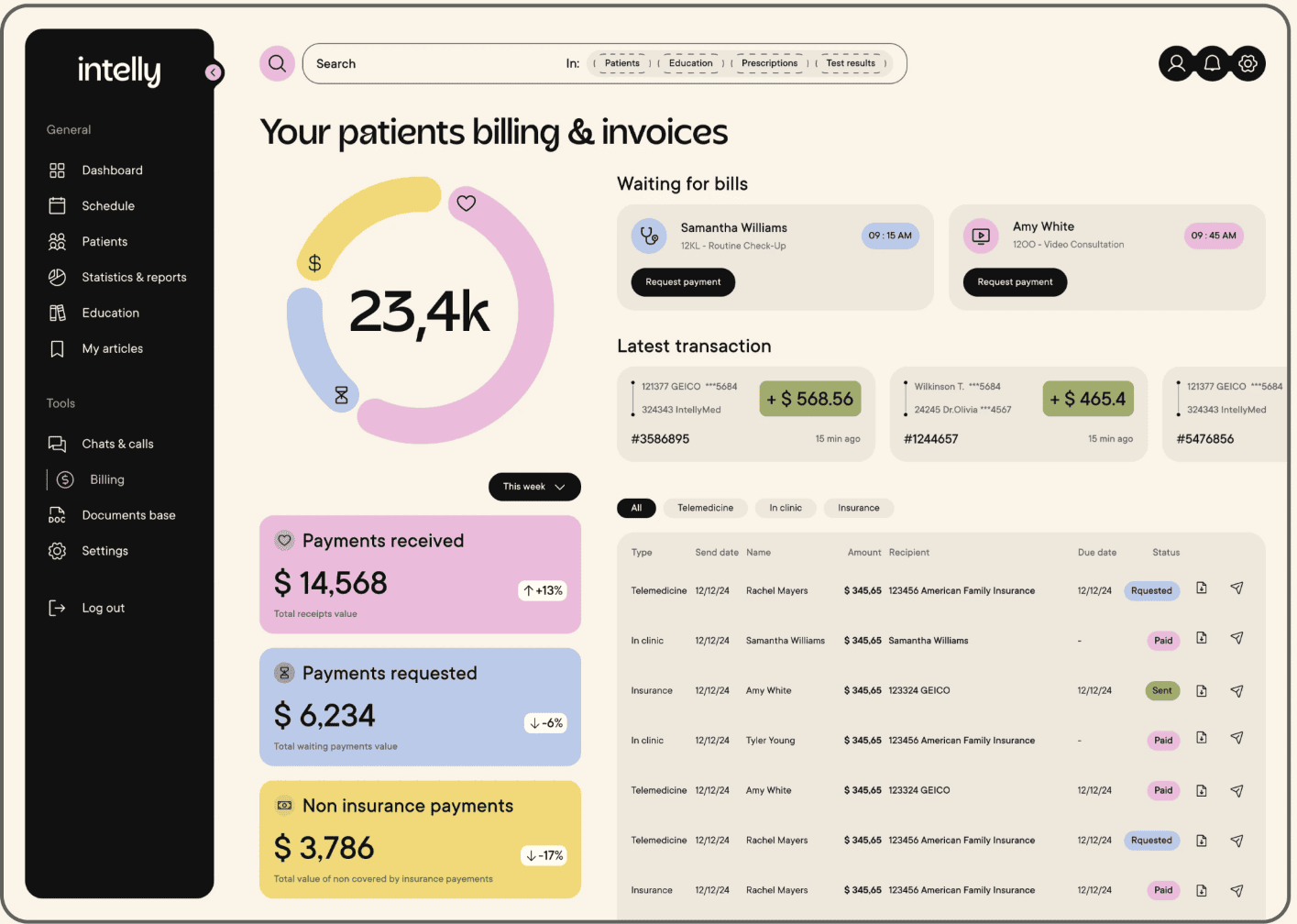
Example of Digital Wallets for Memberships feature: Intelly – Healthcare App UI & Branding By Sigma Software Design
Patient Experience and Engagement
- Visual Treatment Plans: A clear roadmap showing the patient exactly what to expect over the next 3 to 6 months. Seeing the future milestones keeps them committed to the full protocol.
- Private Before and After Galleries: A secure, encrypted space where patients can take and store progress photos. These photos are kept separate from their main phone camera roll for ultimate privacy.
- Automated Aftercare Instructions: Triggered alerts that appear exactly when needed. If a patient gets a laser treatment at 2 PM, the app automatically sends the specific washing and skincare instructions at 8 PM that same evening.
- Procedure-Based Reminders: Smart notifications tailored to the exact treatment. Instead of a generic “time to book” email, the app calculates when neurotoxins or fillers are likely wearing off and prompts the patient to schedule maintenance.
- Secure Messaging for Quick Questions: A direct, secure chat feature. If a patient experiences unexpected redness, they can send a message and a photo to the clinical team instead of panicking or going to urgent care.
- Digital Wallets for Memberships: An interface showing the patient their banked membership funds, available loyalty points, and remaining prepaid treatments. Making this transparent encourages them to spend their balances.
- Simple Retail Skincare Sales: An integrated shop allowing patients to repurchase the exact medical-grade skincare products their provider recommended, shipped directly to their door.
- Smart Intake Forms: Digital consent forms that change dynamically based on the requested treatment. Patients review and sign HIPAA-compliant documents right on their screens.
Clinical Operations and Management
- Unified Admin Dashboard: A single interface that aggregates data from every connected tool. Staff can review a patient’s booking history, pharmacy orders, and daily logs without switching between different software tabs.
- Clinical Data View: A charting system that takes all the daily logs the patient entered at home and converts them into easy-to-read graphs for the medical practitioner to review before stepping into the treatment room.
- Advanced Funnel Reports: Visual charts showing exactly how many people downloaded the app, started the intake form, and completed a booking, allowing for precise marketing adjustments.
- Automated Compliance Rules Engine: The backend architecture that automatically blocks out-of-state leads or flags patients who have medical contraindications for certain medications.
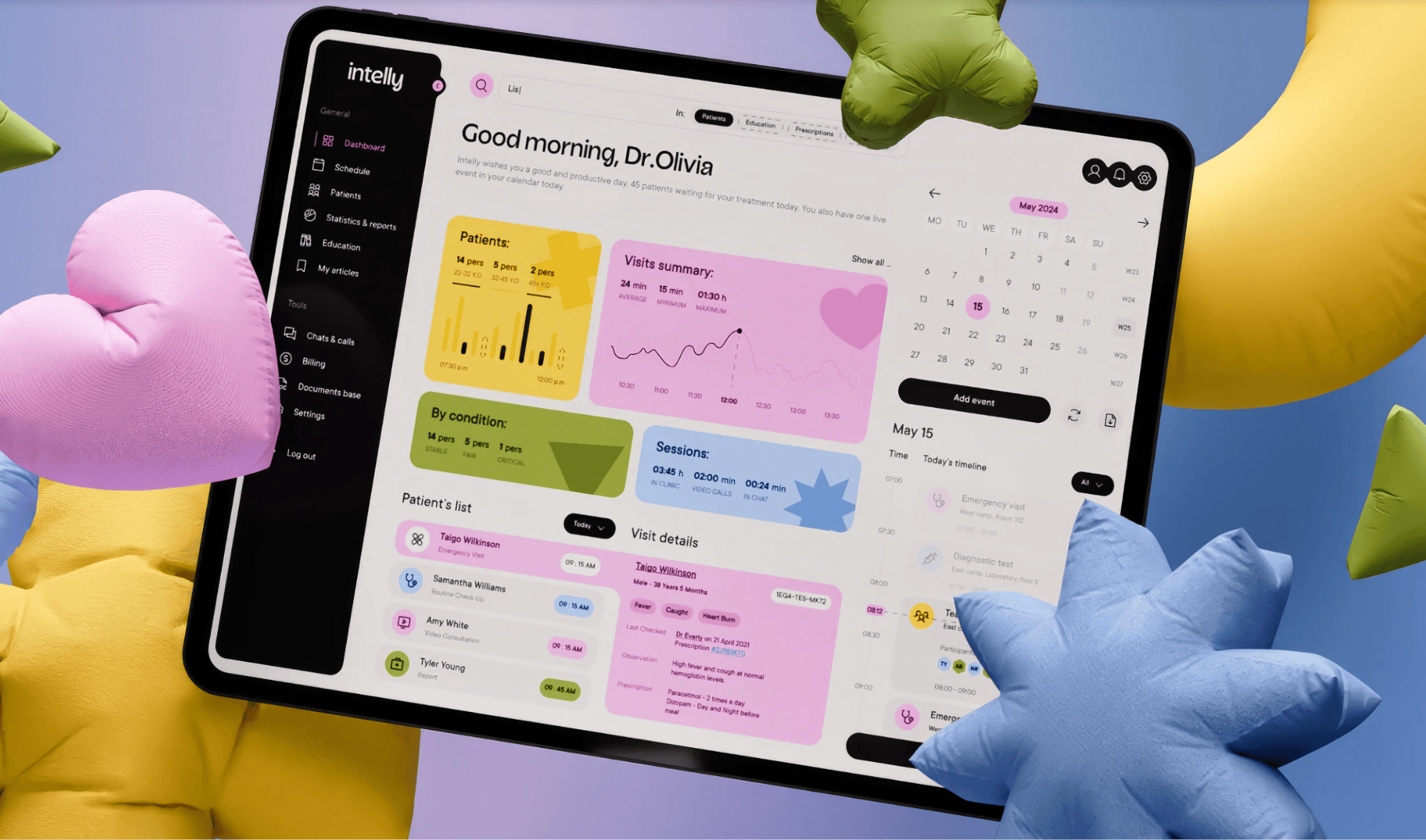
Example of Unified Admin Dashboard feature: Intelly – Healthcare App UI & Branding By Sigma Software Design
Need professional help with building a medical aesthetics mobile app?
How to Actually Build the App
Creating medical software requires serious technical rigor. The process must prioritize security, data architecture, and long-term scalability.
1. Market Feasibility and Regulatory Mapping
Before any technical work begins, the specific needs of the clinic must be documented. An app for a local medspa requires a vastly different architecture than a national telemedicine platform. The engineering team must map out all operating states and list the exact regulatory restrictions that will govern the rules engine.
2. User Experience Architecture and Conversion Strategy
This phase focuses heavily on solving the customer acquisition cost problem. UX architects map out the onboarding flow screen by screen. The goal is to design an interface that builds trust and removes friction. During this phase, the team also defines the A/B testing strategy, determining exactly which screens will have variations to test user behavior and improve conversion rates.
3. Middleware and API Infrastructure
This is the most critical phase for preventing data loss. Software architects design the underlying middleware layer. This infrastructure dictates how the new mobile app will communicate with the clinic’s existing EMR, payment processors, and pharmacy dispatch systems. A robust API strategy ensures the app will not crash under heavy user loads or when third-party software updates.
4. Core Engineering and Implementation
The engineering team splits into frontend and backend divisions. Frontend engineers build the interface that the patient interacts with on their mobile device. Backend engineers construct the secure databases, the rules engine, and the server logic. For any medical app, data encryption at rest and in transit is mandatory to meet HIPAA standards.
5. Quality Assurance and Penetration Testing
Quality assurance goes far beyond clicking buttons to check for broken links. Security specialists perform penetration testing, actively trying to breach the application to ensure patient health information remains locked down. The QA team also rigorously tests the funnel analytics by abandoning forms on purpose to ensure the tracking events fire accurately.
6. Deployment and Continuous Iteration
The application is deployed to the App Store and Google Play. Immediately after launch, the product team begins monitoring the real-world funnel analytics. They look for areas where live users hesitate or drop off, releasing subsequent updates to smooth out the experience and maximize patient retention.
Why Sigma Software Group is the Right Fit
Finding an engineering team that excels at both high-end user experience and heavy medical compliance is a challenge. Sigma Software Group is uniquely positioned to deliver complex healthcare solutions.
Specialized Healthcare Expertize
Sigma Software possesses deep domain knowledge in the medical space. The engineering teams understand how to manage sensitive health records, maintain strict data security, and navigate complex compliance laws. They build medical applications that feel fast and modern to the patient while maintaining enterprise-grade security on the backend.
An In-Depth Discovery Phase
Projects at Sigma Software begin with a rigorous discovery phase. Business analysts evaluate the clinic’s current software stack, identify the root causes of high acquisition costs, and map out the exact middleware architecture required. The precise business logic and API strategy are fully defined before the engineering phase begins.
Advanced Engineering Capabilities
Building a rules engine that checks state medical laws in real time is a highly complex task. Seamlessly routing data from a modern mobile app into a legacy EMR system requires great technical skill. The backend architects at Sigma Software Group have the talent to make these complex, data-heavy systems function quietly and reliably, allowing clinic staff to focus entirely on patient care.
Need professional help with building a medical aesthetics mobile app?
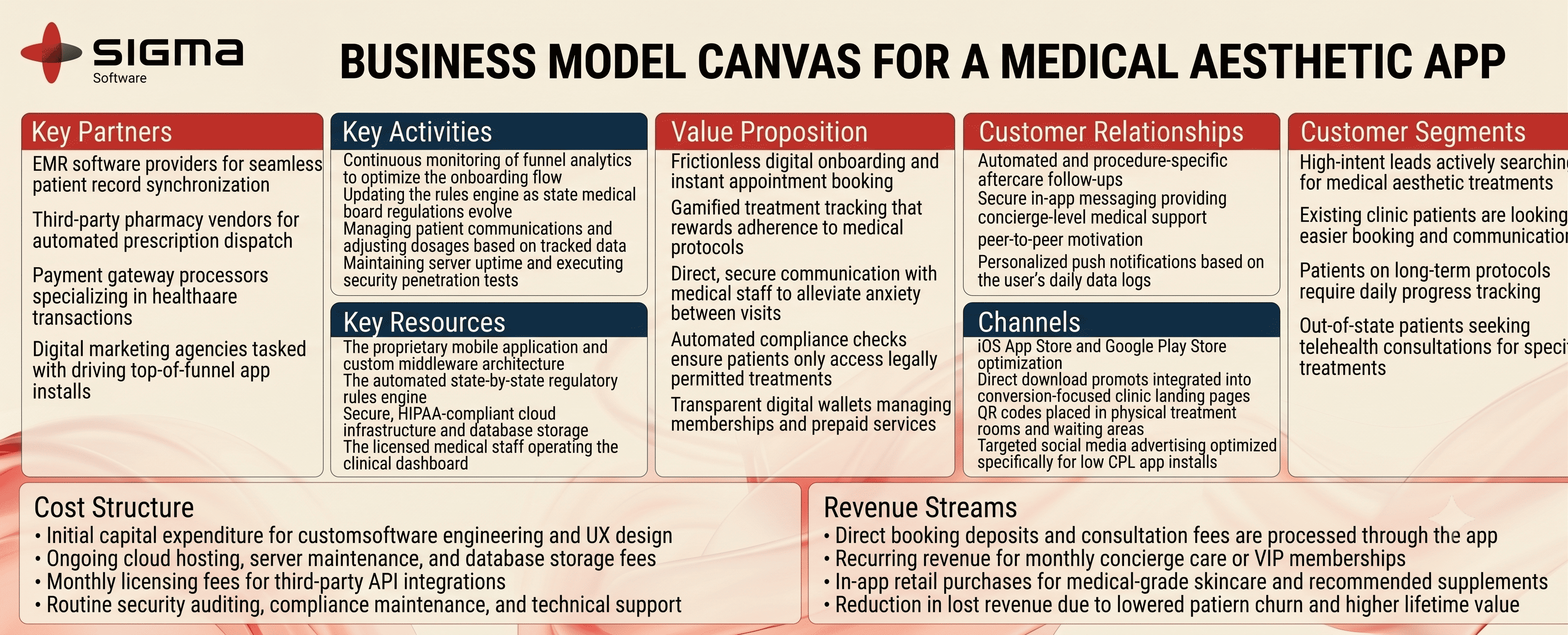
Bonus: Business Model Canvas for a Medical Aesthetic App
To effectively plan the business strategy before starting development, this detailed Business Model Canvas outlines the operational mechanics of a custom aesthetic platform.