AI agents can make decisions, execute commands, and interact with business systems with increasingly little human involvement. But when something goes wrong, who is responsible? And how can companies maintain security, compliance, and cost control without restricting the very capabilities that make AI valuable?
Sandboxes, Harnesses, and the Limits of AI Control
Compliance Without Slowing Innovation
These questions are becoming more urgent as enterprises move beyond AI experiments and give autonomous systems a bigger role in everyday operations.
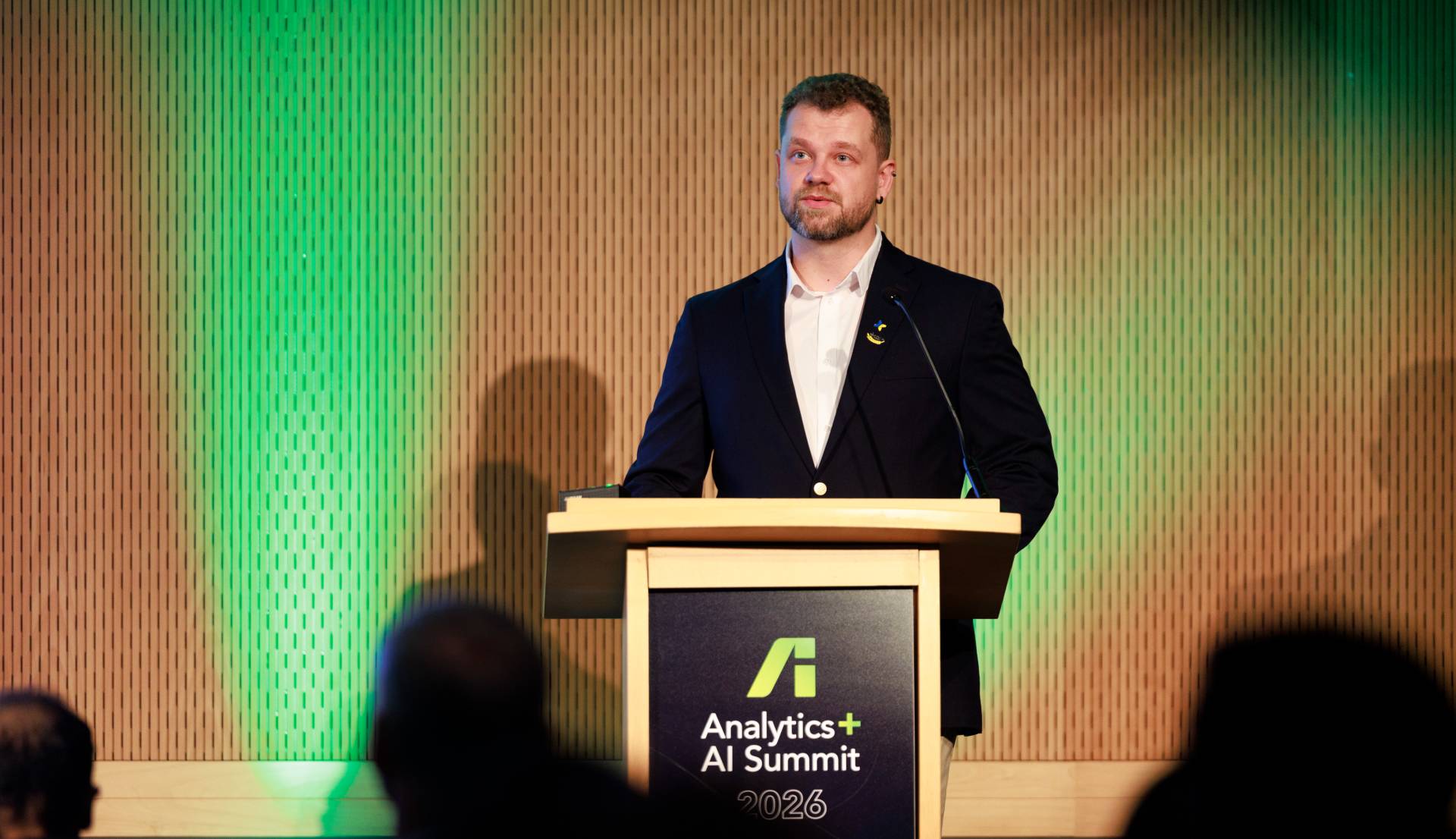
At AI Practitioner Summit 2026, the panel “The Assurance Layer: AI Security, Compliance & Cost Visibility” explored how enterprises are addressing these challenges.
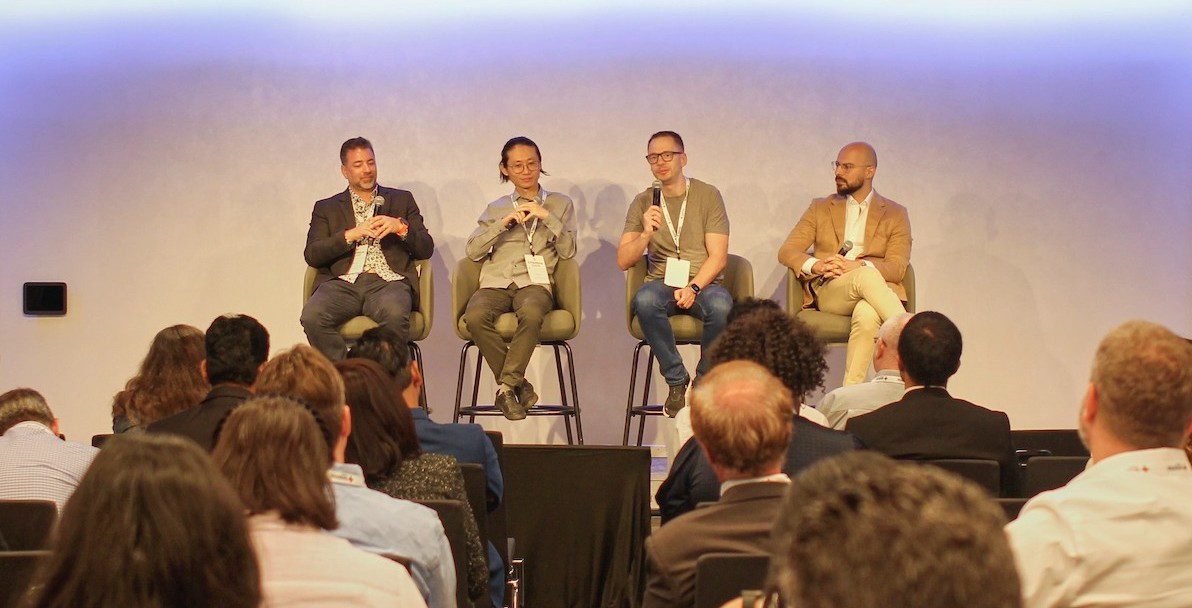
Moderated by:
- Justin J. Leto, Global Principal Solutions Architect, Private Equity — Amazon Web Services
Panelists:
- Song Du, CTO at Swivel
- Alexey Stoletny, SVP Global Engineering at HUMAN
- Mamdouh Alramadan, Managing General Partner at XTAM
Drawing on experience in advertising technology, cybersecurity, and enterprise AI implementation, the speakers discussed how to build effective safeguards, balance innovation with compliance, choose between frontier and open-weight models, and connect AI spending to measurable business value.
Key Takeaways
- AI assurance is still taking shape. Security, compliance, accountability, and cost visibility all matter, but there is no universally accepted framework. Cross-functional governance helps companies address these issues without unnecessarily slowing innovation.
- AI agent permissions need deliberate limits. The panel discussed limiting agents’ combinations of permissions, sandboxing, and asking whether a task needs an autonomous agent at all.
- Compliance should be built into AI workflows. Validating an agent’s actions during development and recording them in production creates a foundation for both compliance testing and auditability.
- Savings from open-weight models depend on workload and scale. Local deployment can significantly reduce costs for some teams, while infrastructure, maintenance, and repeated compliance testing can outweigh the savings for others.
- AI spending needs to be linked to business value. Logging, tagging, and monitoring reveal where costs come from, while budgets should reflect the outcomes AI delivers.
Who Owns AI Assurance?
Justin J. Leto: Let’s start with what the assurance layer is. Who is managing it in your organization, and who owns it?
Song Du: I feel like there’s no definitive answer in the industry right now. It starts with security and safety, but as AI enters the enterprise, people are starting to worry about compliance. We have standards like SOC 2 and other security requirements, but with AI they need to evolve. We don’t have an industry consensus on what those requirements should be yet, but I think in the next 12 months, things will become much clearer.
Cost is another part of assurance, especially for large enterprises. They need predictable budgets and financial projections, particularly if they’re publicly traded. We have some ideas of what these different layers mean today, but as AI models evolve, I expect each to become a distinct area of focus.
Justin J. Leto: Alexey, are assurance requirements slowing down AI initiatives or preventing AI from scaling?
Alexey Stoletny: I don’t think they’re necessarily slowing things down, but they could. At HUMAN, we’ve created an AI council with representatives from different departments to help resolve issues and move things faster. AI deployment raises questions across multiple disciplines: how customer data is used, what costs to expect, and what AI is allowed to do. We’re seeing more and more of these questions, often without clear answers or established precedents.
But governance is essential because accountability still lies with people and organizations.
We can’t simply blame AI if customer data ends up somewhere it shouldn’t. The challenge is finding a way to govern AI while enabling innovation. Too many restrictions can prevent engineers from using AI effectively, but too few can undermine accountability. Finding the right balance is tricky, and working with the right partners can help.
Justin J. Leto: Mamdouh, you work with a lot of regulated customers. What approaches are you seeing across different industries?
Mamdouh Alramadan: How companies approach AI governance depends heavily on their industry and regulatory requirements. In government, for example, we see dedicated AI offices and strict rules around data use, employee interactions with AI, and the tasks they perform. Many companies also bring in consultants to audit their policies and processes.
There’s no silver bullet. Everyone is trying to get ahead of the risks by introducing appropriate policies, monitoring, and controls.
In the enterprise sector, the focus often shifts from internal AI usage to how customers interact with AI-powered products. One of our clients serves K–12 schools, where a major concern is detecting signs of self-harm or emotional distress when students interact with AI. Addressing this requires more than policies; the safeguards need to be built into the product itself.
What Needs to Be Controlled?
Justin J. Leto: What actually makes up the assurance layer? Which components are the most critical?
Song Du: At Swivel, we automate ad operations for large connected TV platforms like LG. For our customers, security is the main concern, and it comes down to two things: what AI models can see and what they can act on.
First, there’s data access. We need to make sure models aren’t exposed to information they shouldn’t see. Second, there’s the question of what decisions they’re allowed to make. Say an AI model decides to change an advertising campaign’s floor price by 10%. Was that the right decision? Who authorized it, and who’s accountable?
Alexey Stoletny: There are several aspects to consider. On the legal side, customers want to know what happens to their data. Can it be used for training? Can it be retained? Is it allowed to reach a particular model? Then there’s security: what commands AI can execute, what level of authority it has, and how we monitor its actions in real time. We also need auditability, so we can understand who did what and investigate incidents.
Cost is another consideration. Who approves AI spending, and how does that spending translate into business value? No single person, even a Chief AI Officer, can answer all these questions alone.
Justin J. Leto: AI agents are making engineering, product development, and other processes move much faster. Is AI assurance evolving to keep up, or will AI itself become part of the solution?
Mamdouh Alramadan: Moving 10 or 15 times faster with AI doesn’t necessarily mean we’re more efficient. Ultimately, AI is another technology, and the same security and assurance principles still apply. Think about a payment system: you need to know where your credit card or bank information goes and whether you’ll be charged the amount shown on the screen. These aren’t new concerns, and we don’t need to reinvent the entire security playbook just because we’re dealing with AI.
What is different is AI’s ability to take action somewhat autonomously. That’s where much of the attention is going now. For us, working with different clients means following their existing security principles while determining how to verify AI’s actions, when human involvement is necessary, and when a process is predictable enough for AI to handle on its own.
Sandboxes, Harnesses, and the Limits of AI Control
Justin J. Leto: AI creates new attack surfaces and potential threats. What tools and controls do companies need to make agentic AI safe?
Song Du: I’ve spent the past nine months building these components for customers, and I think two are particularly important for enterprises. The first is an execution sandbox, an environment where AI models can use tools and execute generated code. You can build one yourself or carefully select a vendor, but the key is to control what the model is allowed to do and keep a trace of its actions, especially when those actions have real-world consequences.
The second is an AI harness. Models can hallucinate, and their outputs aren’t deterministic. A properly designed harness helps ground them in reliable information and makes their outputs more predictable and measurable. These are the two components I’d recommend starting with.
Mamdouh Alramadan: A recent DARPA program, for example, is soliciting proposals on how autonomous agents can continue following instructions if they lose contact with command and control. It’s a difficult problem, and nobody has a definitive solution yet.
We’re still in the assembly-language era of AI: powerful, but primitive and not yet fully reliable.
The technology could look very different in two or three years. That’s why work on new tools and theories is already underway. One approach we’re exploring is using semi-deterministic machine learning harnesses to keep agent behavior within defined boundaries.
Alexey Stoletny: The problem remains largely unsolved. One useful principle is Meta’s Rule of Two: an agent shouldn’t have all three capabilities at once: processing untrusted inputs, accessing private data, and communicating externally. Two at a time is the maximum, and sometimes even fewer is better.
Some vendors promise to detect and stop harmful actions automatically, but I’m not entirely sold on those claims. There is still a risk that a model could escape a sandbox. But some widely reported “escapes” turn out to be poorly secured sandboxes presented as a breakthrough. For now, I’d rely on established practices: properly configured sandboxes, testing, peer review, and scoping agents to a narrow set of tasks.
And do you really need an agent, or would deterministic code do the job?
Sometimes a few lines of code can handle a task more reliably. We need to be selective about where AI autonomy adds value.
Compliance Without Slowing Innovation
Justin J. Leto: There’s always a trade-off between mitigating security risks and delivering new product features. How do you find the right balance while maintaining compliance and quality?
Song Du: One important thing we’ve learned from working with large enterprise customers is that compliance needs to be built into the product itself, particularly the components that interact directly with AI models. When a model makes a decision and translates it into a tool call, you need to understand what it’s trying to do and whether that action meets the customer’s requirements. A tool call might search the internet or update information in a CMS or campaign management system. You should be able to see exactly which objects, fields, and values are being changed.
Checking an agent’s tool calls during development becomes part of compliance testing; logging those same actions in production creates an audit trail. If an AI agent’s actions are properly logged, companies should be able to investigate suspicious behavior without discovering it months later. Those records also support security investigations and compliance reviews.
Alexey Stoletny: We try to introduce guardrails around which tools and connections are allowed, balancing compliance, security, and cost with the freedom to innovate. Imagine tagging an AI agent in a Jira ticket and asking it to fix something. It could go through your backlog, generate a huge number of pull requests, and run up a substantial bill, all because of one comment.
You don’t want to give AI access to every tool without understanding the consequences.
But the opposite extreme doesn’t work either: forcing engineers to use a tightly restricted interface approved by multiple security teams. Our approach is to enable a broad range of approved tools, working with partners that can meet our requirements while helping us control costs.
Mamdouh Alramadan: In highly regulated industries, sometimes the existing rules make a proposed AI solution impractical or even impossible. That’s when we may need to advocate for a significant change, while meeting the customer where they are today. We might work with their legal team on new policies and use evidence and practical examples to show that a different approach can be safe. Or we might find a way to introduce AI while respecting their existing data-handling restrictions.
Today, assurance is often a response to what customers demand, not a set of rules carved in stone.
Open-Weight vs. Frontier Models: What Makes Business Sense?
Justin J. Leto: There’s growing interest in open-weight models, especially as companies look for ways to control AI costs. Are you hosting models internally, and does it make economic sense?
Mamdouh Alramadan: We use open-weight models for two reasons: research and cost. We’re experimenting with different models, including GPU-based deployments, to test whether we can adapt larger models to specific domains through techniques like distillation and quantization.
We also did a rough cost analysis. At a certain number of engineers, hosting an open-weight model could break even with commercial coding tools, and beyond that it could start saving money. But you still have to account for infrastructure, DevOps, and staffing costs.
For us, the more interesting question is whether we can take a large open-weight model, adapt it to a particular use case, and offer it as a solution to clients.
Alexey Stoletny: We have three broad types of workloads: engineering, product workflows, and offline classification or research. For engineers, we use third-party hosted models, both frontier and open-weight, as well as local models on powerful workstations. We also use open-weight models with confidential computing when protecting prompts from third-party logging is particularly important.
Using local and other model options can make a substantial difference to our costs; in some scenarios, we’d otherwise be paying roughly twice as much. On the product side, we also look for predictable, high-volume workloads where infrastructure can be used continuously. The right deployment strategy depends on the use case, security requirements, and economics.
Song Du: My answer might be a little controversial, but we don’t currently use open-weight models. From a total cost of ownership and ROI perspective, if a frontier model delivers the quality and value our customers expect, switching isn’t necessarily worth it. There are hidden costs: you have to repeat compliance and quality testing, and there’s no guarantee a replacement model will pass.
Open models can also change abruptly. A newer release can replace a relatively recent version with very little notice. That leaves little assurance that customer-facing results will remain the same. Quality and compliance can outweigh relatively small cost savings. Open-weight models may make sense as we move toward more granular advertising decisions, but we’d need to evaluate the full business case before making that switch.
AI FinOps: From Cost Visibility to Business Value
Justin J. Leto: At AWS, we use a FinOps framework built around four steps: see, save, plan, and run. First, understand where AI spending comes from and who’s generating it. Then optimize workloads through model selection, caching, and other techniques. Only after that can you make credible forecasts. Finally, put controls in place to manage spending consistently. How are you approaching these steps in your organizations?
Mamdouh Alramadan: I like that framework, although I’d call the planning stage replanning, because assumptions change. For one project, we needed a very large dataset of synthetic conversations to train models to recognize signs of distress. You can’t find that many real examples in existing records. Generating synthetic data using an open model was a cheaper option, although it took longer.
But predicting inference costs for a product used by hundreds of thousands of people is harder. Actual interactions may require far fewer model calls than expected, so you need to monitor real usage and adjust your forecasts accordingly.
Alexey Stoletny: We’re doing all four. We haven’t hit our budget every single month, but after roughly eight months of tracking spending and raising awareness across the organization, we’re broadly on target. Visibility is key: without logging and tagging, you might not even realize that every subagent is running on the most expensive model.
But the most important question isn’t how much AI costs. It’s what value that spending creates. We allocate AI budgets to engineers based on the business value they can demonstrate, whether that’s revenue, cost savings, or customer KPIs. The greater the expected value, the more we’re willing to invest. Otherwise, access to expensive models is limited, although engineers can still experiment locally. We’re also seeing engineers make that judgment themselves: when they can’t yet explain the return, they’re reluctant to spend heavily.
Justin J. Leto: That brings us to the other side of FinOps: how do you connect AI spending to actual business outcomes?
Song Du: I think tagging is the answer. It’s similar to what we did in the big data era: tagging datasets, queries, results, and compute resources to understand costs and connect them to outcomes.
The same approach works for AI. But there’s one important difference: we need to keep repeating the process. AI models are evolving so quickly that their capabilities can change significantly in three or six months. Products are changing just as fast, and the way we use models changes with them.
It’s not enough to optimize your AI spending once. You need to revisit the entire calculation regularly, perhaps every three months or even sooner, to make sure your choices still make sense.