


EEBus certification is only the starting point. The real work begins with ensuring production interoperability

The EEBus standard defines the protocol, but production success depends on how well devices work together in the field.

That’s why the Sigma Software team not only implements EEBus into your product, but also connects it to the systems around, supporting its real-world deployment and helping manufacturers to:

Implement EEBus correctly from the start

  • SHIP/SPINE stack implemented with production-grade architecture
  • Use case coverage scoped and prioritized against your regulatory deadlines and device portfolio
  • Open-source components that reduce rework and speed up implementation

Get certified & survive the real grid

  • Gap analysis of your current implementation setup against certification requirements
  • Test scenarios built beyond the certification suite covering real-world edge cases
  • Monitoring and alerting functionality to notify protocol-level failures and use case violations in production

    Interoperate across vendors without surprises

    • Interoperability testing against third-party devices beyond your own stack
    • Diagnosis and resolution of vendor-specific EEBus interpretations that break cross-manufacturer communication
    • Implementation patterns that hold as the device ecosystem around your product grows

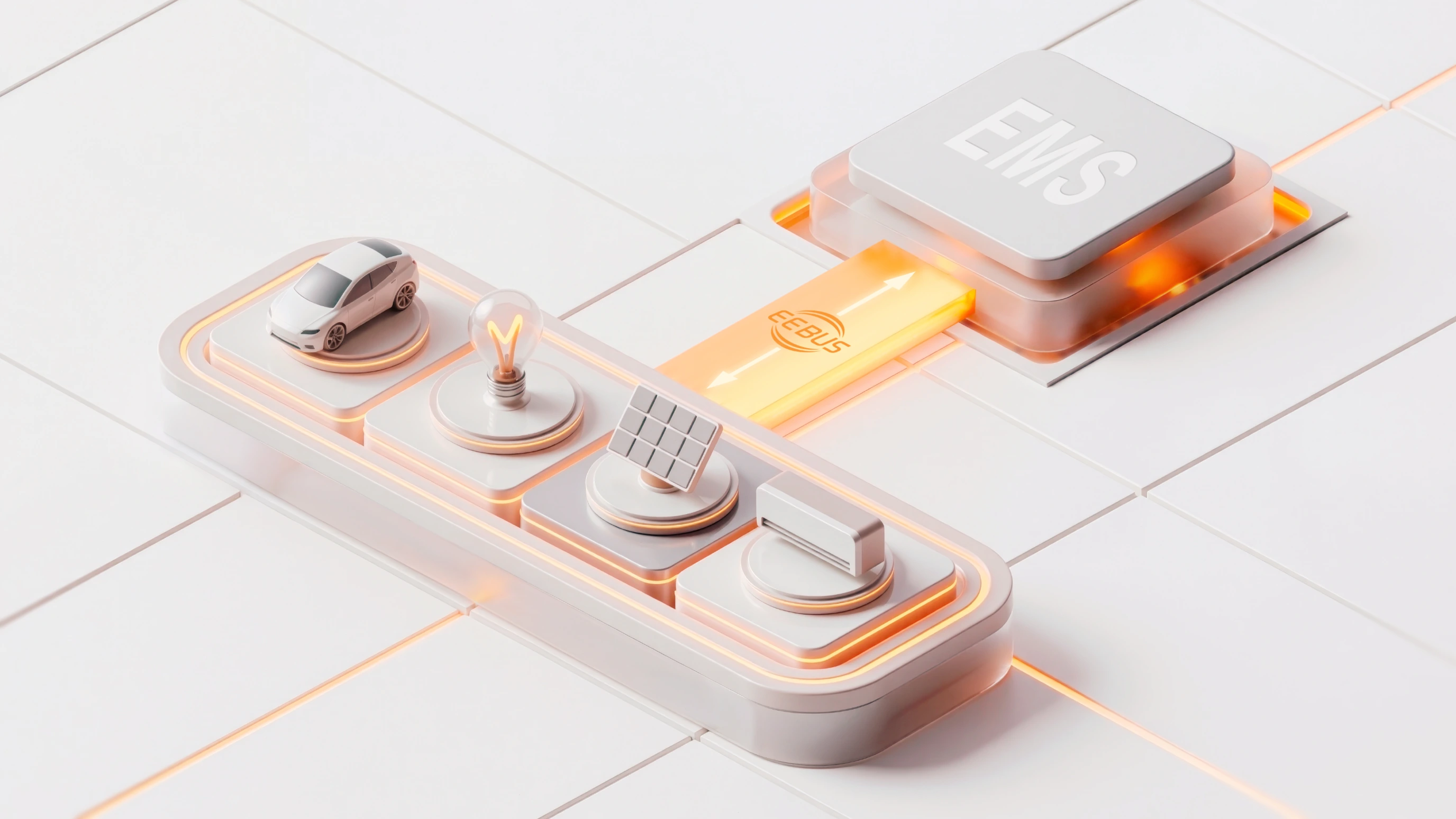
    EEBus brings different requirements for different ecosystem actors. We know how to implement them in practice

    The device that needs to speak EEBus

    Manufacturers need an EEBus implementation that enables their devices to work correctly with systems they have never been integrated with before.

    We help you to:

    • Translate ambiguous use case specifications into correct behavior based on real grid and device experience
    • Prioritize use case coverage against your actual regulatory deadlines and device roadmap
    • Minimize rework by building on proven open-source foundations (NIBE) or developing custom solutions where needed
    • Close the gap between certification test results and production behavior before your product ships

    The system that coordinates across devices

    HEMS platforms, aggregators, and grid operator systems depend on EEBus working correctly across every device, even though those are built by different vendors and behave differently.

    We help you to:

    • Design and implement EEBus integration for coordination systems that need to work across multiple device manufacturers and product generations
    • Handle vendor-specific EEBus interpretations that break cross-manufacturer communication in production
    • Build real-time communication patterns that hold under grid conditions
    • Add monitoring and alerting for protocol-level failures and use case violations in production

    The developer implementing EEBus

    Engineers working with EEBus face problems that documentation alone can’t solve. Unclear use cases and gaps in testing require hands-on experience.

    We help you to:

    • Interpret and implement use cases correctly based on production experience across device types and grid environments
    • Set up testing infrastructure that simulates real device behavior and grid conditions, catching failures before they reach hardware
    • Support upgrades and use case additions without breaking existing integrations
    • Engage experienced EEBus engineers to support your team
    case-study-eebus-foundation

    Building an open EEBus foundation for the energy transition systems

    • Over 10 EEBus use cases implemented and published as open source
    • 5 vendors across the energy and HVAC domains have already adopted the solution
    • The solution is co-developed with NIBE – Europe’s top manufacturing expert

    We combined our production-grade engineering with NIBE’s HVAC expertise and real-world use cases to deliver an open-source EEBus implementation solution that reflects how the standard actually behaves in production.

    The result is a ready-to-use foundation that manufacturers and energy software teams can build on, extend, and certify against. Starting from scratch becomes unnecessary.

    case-study-sponsoring-and-maintaining-new-eebus

    Sponsoring and maintaining new EEBus use cases for the energy ecosystem 

    • 5+ new EEBus use cases contracted, co-sponsored, and currently in development
    • Wide range of energy-consuming device categories covered, including batteries and flexible load devices

    Several vendors identified gaps in the official EEBus specification and decided to extend the standard itself. Sigma Software has entered sponsorship agreements to co-define, implement, and maintain the new use cases.

    Those include adding new categories such as battery storage systems and other flexible energy-consuming devices. Each use case is being developed against real production requirements, will be shared with the EEBus Initiative, and published as open source.

    Why teams choose Sigma Software as their EEBus implementation partner

    We work with the stack you have, not the tools we prefer

    EEBus implementation lives inside an existing environment: cloud infrastructure, device firmware, energy management platforms, and established engineering practices. We work in your existing setup across AWS, Azure, GCP, and on-premises environments, without requiring changes to your gateway, platform, or tooling.

    We build for production, not just certification

    Certification shows that your product meets the standard. It doesn’t guarantee it will work reliably with other devices and real grid conditions. We identify and fix any gaps before your product ships, not after issues appear in production.

    We implement for your actor, not a generic EEBus pattern

    Device manufacturers, coordination systems, and developers building on open source all need different things from EEBus. We design implementation, use case coverage, and integration architecture around how EEBus will actually be used in your environment.

    We build it, you own it

    Delivery does not stop at an implementation stage. It includes the codebase, test infrastructure, documentation of implementation decisions, and use case interpretations. We provide everything your team needs to extend the system from day one. No lock-in. No dependency.

    We work across the markets where EEBus is moving the fastest

    Sweden, the Netherlands, Germany, and the US have different regulatory contexts, grid requirements, and stages of EEBus adoption. We worked across all of them and already know the requirements of your target market.

      Make your device EEbus-ready

      Book a call

      Sigma Software engagement models

      Most engagements begin with one of the three entry points, depending on where you are with EEBus now and what you plan to do next.

      EEBus implementation project

      Goal: deliver a defined EEBus scope, from first implementation to certification and production.

      Sigma Software delivers SHIP/SPINE stack implementation, use case coverage, certification readiness, and interoperability validation against real devices and grid conditions.

      Output: a production-ready EEBus implementation in your environment, tested and certification-ready.

      Best fit: a device or system that needs EEBus implemented correctly, a deadline, or a production integration that isn't behaving as expected.

      Embedded EEBus engineering

      Goal: extend your team with experienced EEBus engineers for as long as you need them.

      Sigma Software engineers work as part of your team, covering implementation, use case evolution, cross-vendor interoperability, and production stability over time. Structured as a long-term engagement with a defined communication cadence and clear ownership boundaries.

      Output: ongoing engineering support embedded in your delivery process.

      Best fit: if you need experienced engineers alongside your team to support your active EEBus program to build, certify, maintain, or expand use case coverage.

      Sponsored open-source development

      Goal: accelerate development by building on an existing EEBus foundation instead of starting from scratch.

      Sponsors take the product owner seat in the open-source project, driving prioritization, use case coverage, and development direction within a defined governance and communication framework. Sigma Software provides end-to-end engineering capabilities.

      Output: an open-source foundation that reflects your real-world requirements, maintained and evolved by experienced engineers.

      Best fit: you want to delegate EEBus engineering while keeping influence over how it is implemented in open source.

      Related articles

      Is Your Product §14a-Ready? What Appliance Makers Get Wrong About German Grid Compliance

      is-your-product-%c2%a714a-ready-what-appliance-makers-get-wrong-about-german-grid-compliance

      AI Is Shifting Connected Products From Devices to Outcomes

      ai-is-shifting-connected-products-from-devices-to-outcomes

      Harness Engineering for Manufacturing AI

      harness-engineering-for-manufacturing-ai

      From CAPEX to ARR: How industrial OEMs unlock margin through connected offerings

      from-capex-to-arr-how-industrial-oems-unlock-margin-through-connected-offerings

      Related services

      Cloud & Infrastructure

      Design cloud-agnostic infrastructure for complex systems at any scale

      Embedded Software Development

      Engineer connected systems that meet real-world industry and market demands

      Data Engineering

      Build governed pipelines for secure data exchange across connected energy systems
      Sigma Software has offices in multiple locations in Europe, Middle East, Northern and Latin America