


85%
of L1 requests resolved autonomously by AI
Routine volume closes without human intervention, giving agents more time for exceptions and technical requests.
Managed technical support services
From first customer question to code-level fix. One managed service.
Sigma Software brings AI self-service, 24/7 multilingual frontline support, L2 specialists and product engineers into one operation. AI resolves routine requests. Technical teams investigate complex issues and take them through to a permanent fix. Shared knowledge helps the next similar case resolve earlier.
The model
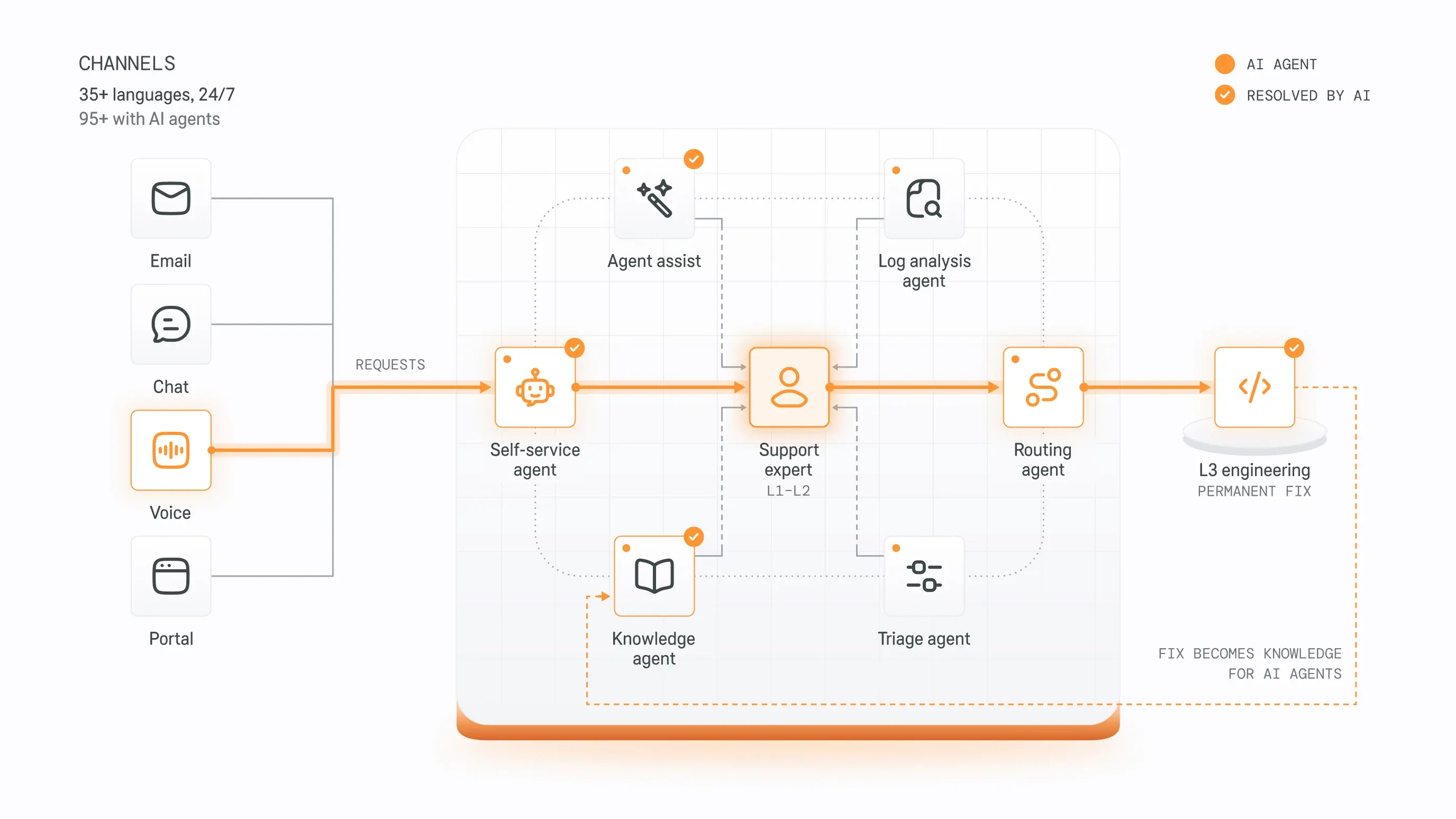
AI handles routine volume. Technical specialists investigate what frontline support cannot solve. Engineers step in when the product needs a fix. One managed operation connects the work across every tier.
AI agents resolve 85% of L1 requests in our clients’ operations. Human agents handle exceptions, sensitive cases and requests that need a person.
L2 specialists investigate APIs, integrations, configuration and product issues. Engineers receive cases that have already been diagnosed, not raw tickets.
On-duty developers and DevOps engineers handle code-level defects, cloud incidents and infrastructure changes. Support does not stop at identifying the problem.
AI, frontline, L2 and L3 work under one managed model. Shared reporting covers SLAs, resolution, escalations and quality across tiers.
Validated resolutions, workarounds and investigation findings become reusable knowledge. AI and human teams can solve the next similar issue without starting over.
What changes
Many product companies run AI self-service, outsourced frontline support, internal technical teams and engineering separately. Each handoff adds work. AI-powered technical and product support connects them in one operating model.
Fragmented support
One managed support operation
How it works
Routine requests resolve through AI self-service or L1. L2 investigates product issues with technical context already attached. L3 handles defects and infrastructure changes that need engineering. Validated resolutions return to the shared knowledge layer, so the next similar case can resolve earlier.
What is different
L2 product support
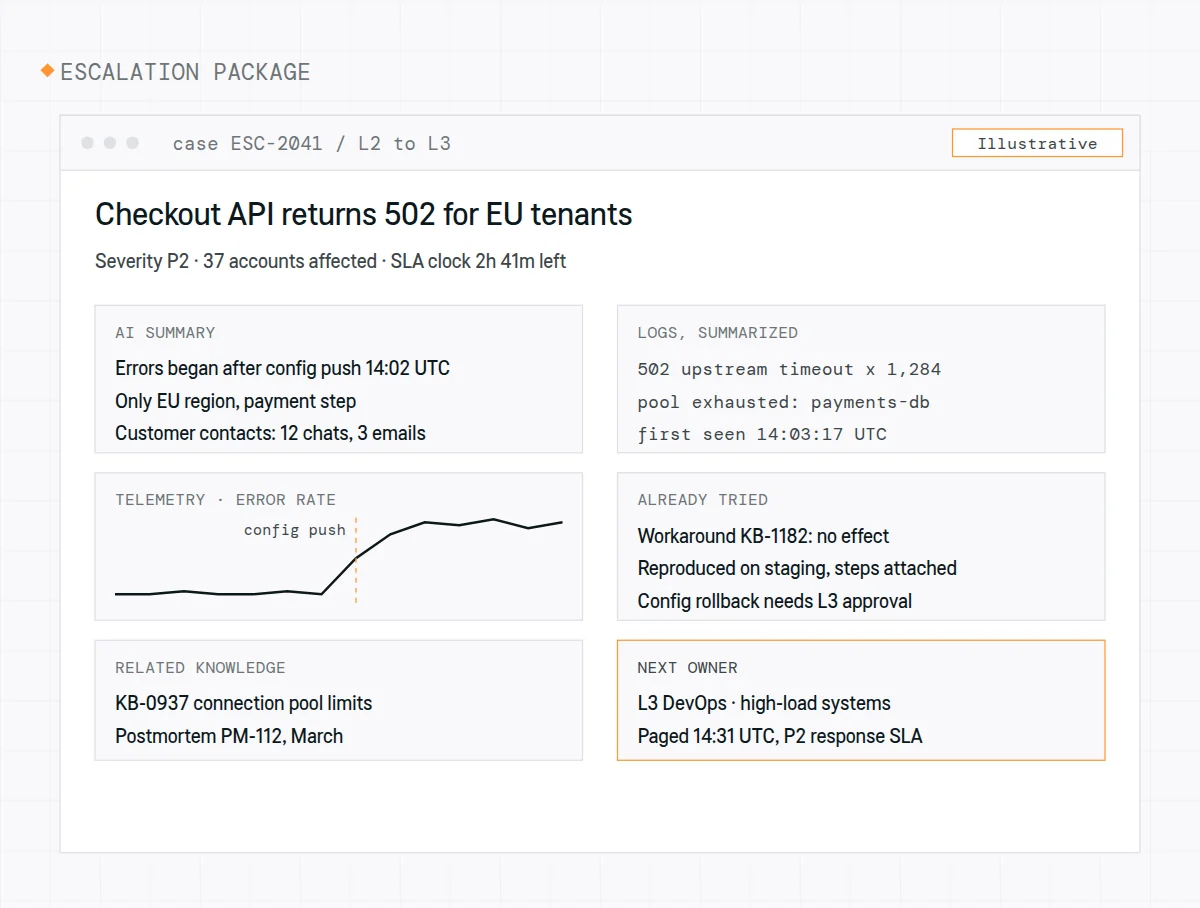
Certified technical specialists investigate issues using logs, APIs, configuration data, telemetry and integration flows. AI collects context, retrieves related knowledge and summarizes findings. More issues resolve at L2, while engineering receives cases ready for action.
L3 engineering
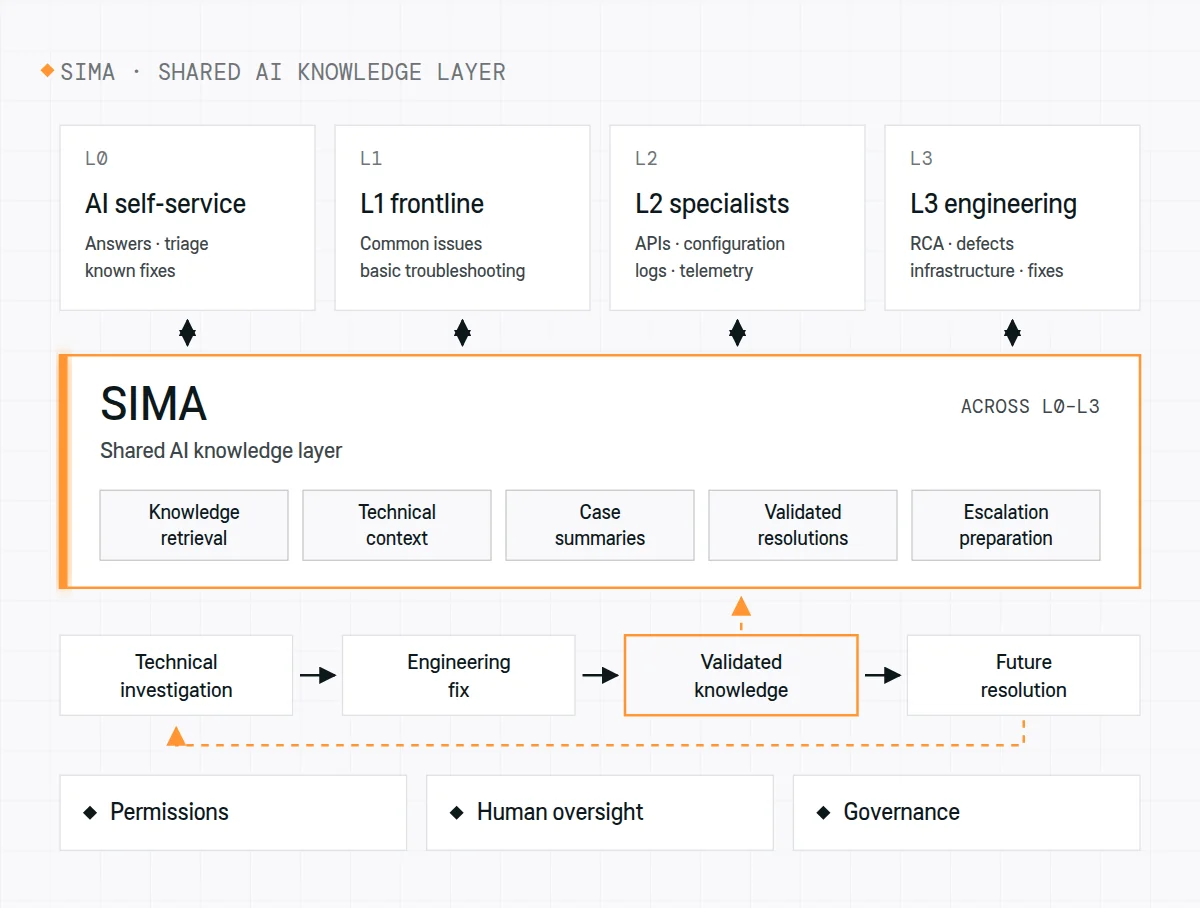
When troubleshooting alone cannot resolve an issue, on-duty developers and DevOps engineers take over. They work on root causes, code-level defects and infrastructure issues. Two separate 24/7 DevOps teams cover critical and secure environments and high-load systems.
SIMA · AI knowledge management platform by Sigma Software
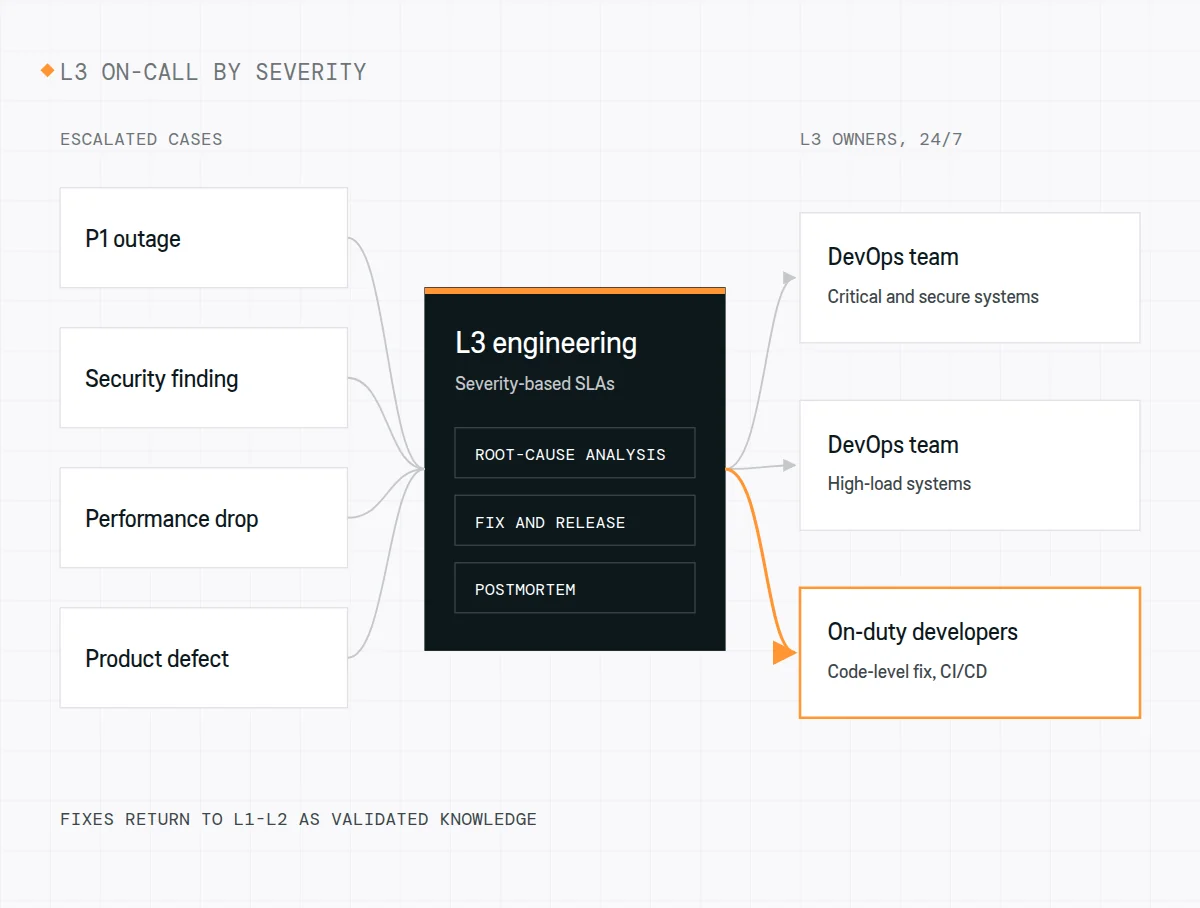
SIMA, Sigma Software’s proprietary AI knowledge management platform, adds a shared AI knowledge layer across support tiers. It brings product knowledge, previous investigations and validated resolutions closer to the teams handling each case. AI agents retrieve answers, while specialists get technical context and relevant troubleshooting history.
When engineering resolves an issue, validated findings and workarounds can return to the knowledge layer. The next similar request starts with what the team already knows.
Why Sigma Software
24/7 multilingual, omnichannel support with established QA processes and 1,000 agents globally. Coverage across chat, email, voice, portal and social media.
AI agents, routing, copilots and knowledge workflows operate in live support environments. Automation supports both customer-facing requests and technical teams.
Certified Microsoft, Atlassian and UiPath specialists handle integrations, configuration and technical diagnostics. Developers and DevOps engineers take over when issues need code or infrastructure changes.
An in-house SOC team, proactive vulnerability patching and PCI DSS Level 1 certified frontline operations. Reporting, access controls and human oversight are part of the managed model.
Service tiers
Three managed service tiers, from AI-powered frontline support to engineering resolution. Each comes with severity-based SLAs and a monthly managed fee.
Resolve routine volume without building more shifts
AI handles everyday requests around the clock. Multilingual agents take exceptions, sensitive cases and requests that need human support.
You get:
Best for: High support volumes, global coverage and faster frontline resolution.
Solve more product issues before they reach engineering
L2 specialists investigate complex product and platform issues using technical data, product knowledge and AI-assisted diagnostics.
You get:
Best for: SaaS and software products with complex integrations and recurring technical incidents.
Take complex cases all the way to a permanent fix
On-duty developers and DevOps engineers resolve issues that need code changes, infrastructure work or deeper product engineering.
You get:
Best for: Product teams where recurring incidents and technical support regularly interrupt engineering.
Results
85%
of L1 requests resolved autonomously by AI
Routine volume closes without human intervention, giving agents more time for exceptions and technical requests.
98%
SLA compliance across supported systems
Established support operations track performance against agreed service targets.
96%
average internal QA score across support handoffs
Quality assurance processes help maintain consistent case handling and technical escalation.
5,000+
technical tickets resolved per month
Technical specialists handle product and platform issues in addition to frontline support volume.
Client stories
L2 support for an automotive manufacturer’s workshops worldwide, with 18/5 coverage.
Our specialists process workshop requests and investigate technical issues. Over the collaboration, the team reduced case handling costs by 3x.
A global video-on-demand platform needed ongoing technical support and maintenance.
We extend the client’s team with platform maintenance, product adaptation and improvements that keep the service running.
A telecom customer needed to route technical support tickets to the right specialists faster.
We built AI-enabled models that analyze ticket content, identify the problem area and suggest engineers best placed to resolve it.
We review your current support setup, ticket volumes, escalation patterns and tools. Together, we identify where AI and technical specialists can reduce workload, and define the managed service scope that fits your product.
AI-powered technical support outsourcing combines support automation with external technical specialists and engineers under agreed SLAs. Sigma Software covers AI self-service, multilingual frontline support, L2 investigation and L3 engineering in one managed service.
L1 handles routine requests, first-contact troubleshooting and routing. L2 investigates product issues using logs, APIs, configuration and telemetry. L3 handles code-level fixes, root-cause analysis and infrastructure changes. AI self-service operates at L0 and supports specialists across the other tiers.
SIMA provides an AI knowledge management layer for shared product knowledge, troubleshooting information and validated resolutions. It helps AI agents and specialists retrieve relevant context and reuse findings from previous cases. The integration scope and supported workflows are defined during service setup.
The service runs on a monthly managed fee per tier. Frontline Support covers L0–L1, Technical Product Support covers L0–L2, and Product Support + Engineering covers L0–L3. Coverage, volumes, severity-based SLAs and scope determine the fee.
No. AI resolves routine requests and helps specialists retrieve information and prepare cases. Human agents handle exceptions and sensitive issues. Technical specialists and engineers investigate and resolve problems that need deeper expertise.
Yes, within the Product Support + Engineering tier. On-duty developers and DevOps engineers handle code-level fixes, infrastructure changes and release support. Access permissions, change approval and engineering responsibilities are agreed during service setup.
An in-house SOC team supports security operations, vulnerabilities are patched proactively, and frontline operations are PCI DSS Level 1 certified. AI interaction transparency, data processing, permissions and human oversight are addressed in the service setup under applicable requirements.
We support SaaS and software product companies across Europe and North America, including DACH, the Nordics and the UK. Frontline support runs 24/7 across chat, email, voice, portal and social media. Human agents cover 35+ languages, while AI extends coverage to 95+ languages.
Tell us how your support works today. We’ll review ticket volumes, technical escalations and service requirements, then propose an AI-powered managed support model for your product.